mysummit.school - AI for Managers Blog

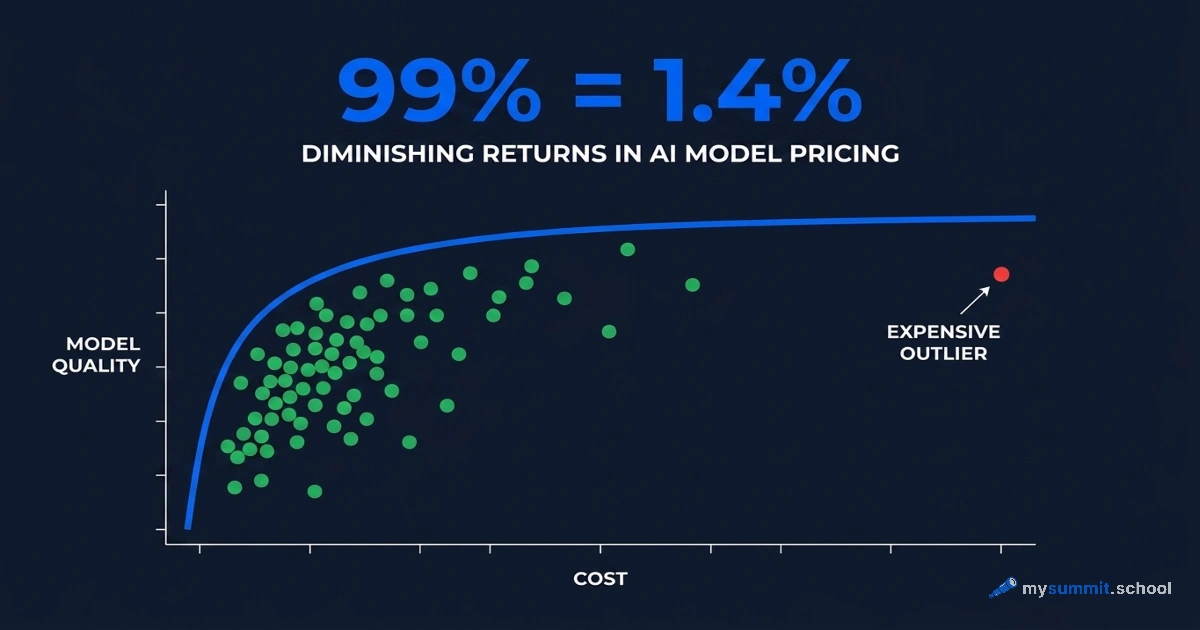
99% Quality at 1.4% of the Price: What's Wrong with the AI Model Market

8 min read

Most managers pick an AI model the same way: grab the most expensive one available. The logic makes sense – pricier means better. That’s how enterprise software worked for the last twenty years.

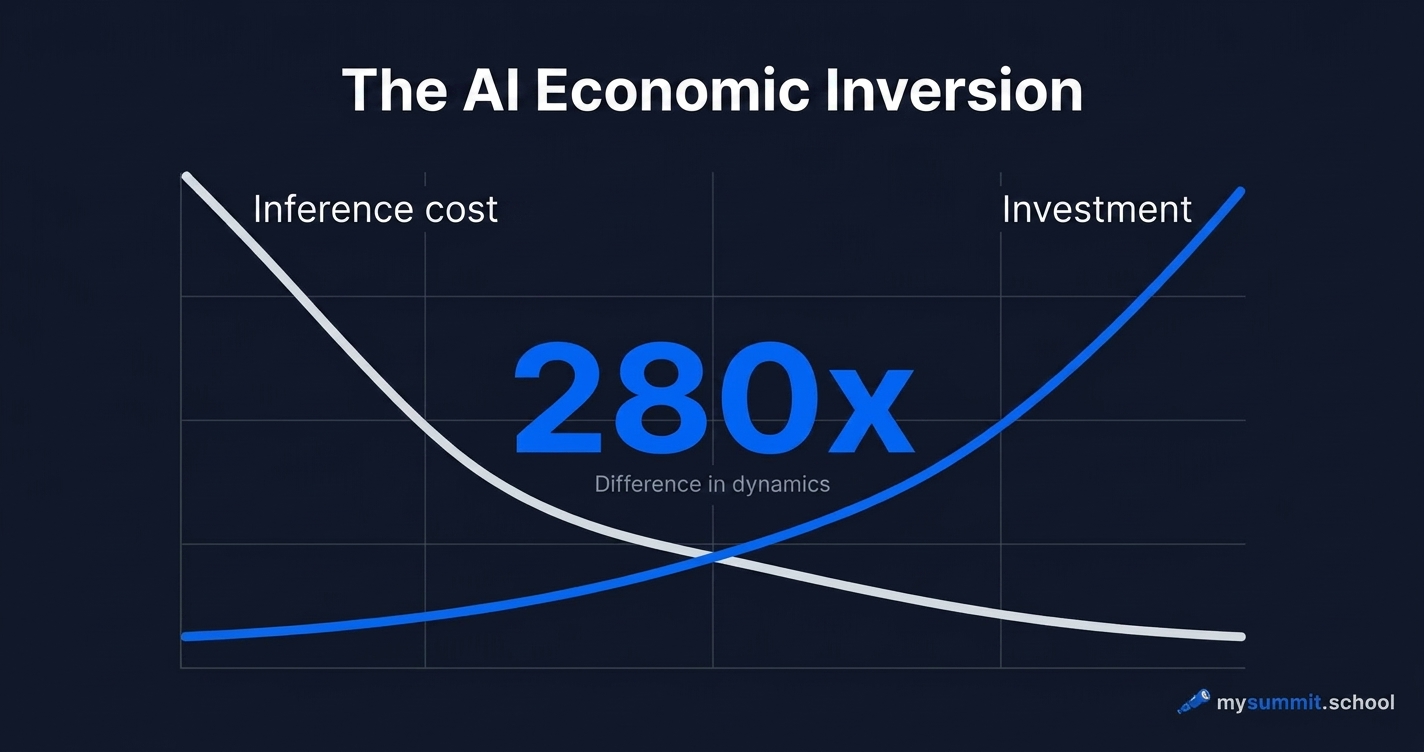
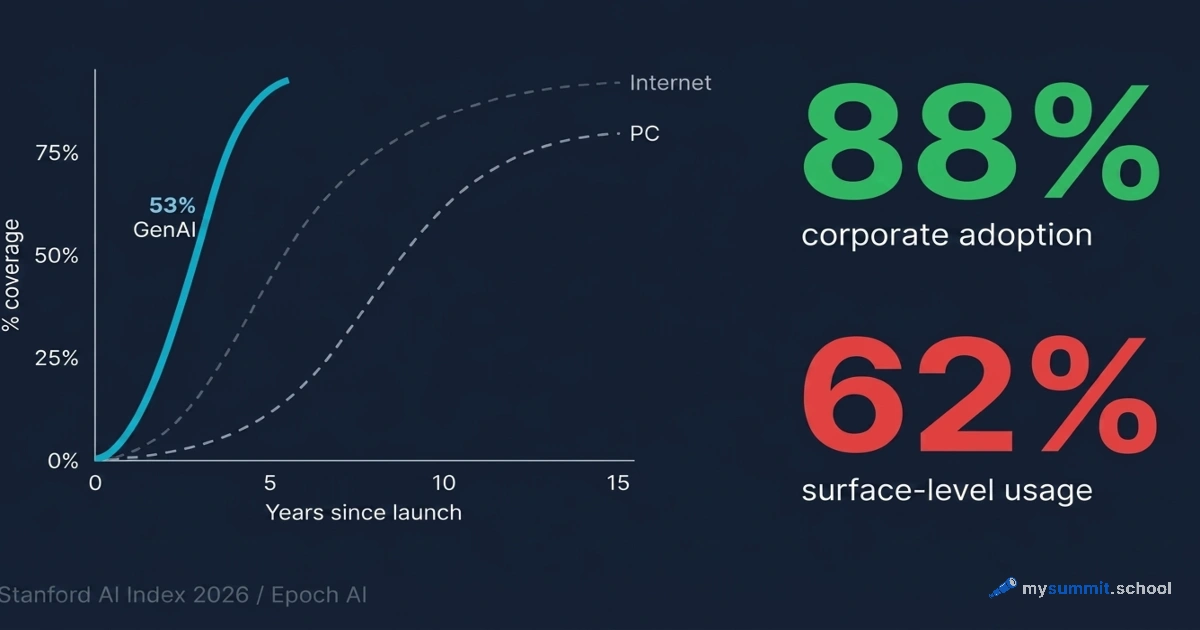
The AI model market in 2026 works differently. The cost per query ranges from $0.0001 to $0.17 – three orders of magnitude. And the actual quality difference between the top ten models? 0.24 points on a five-point scale. Meanwhile, Wharton / GBK Collective reports that a third of corporate AI projects never get past the pilot stage. And Epoch AI shows that only 5.6% of users apply AI in any genuinely deep way.

Maybe the question isn’t which model is best, but whether paying a premium delivers proportionally better results for typical management tasks.

We tested it. The answer was harsher than we expected.

Read more
99% Quality at 1.4% of the Price: What's Wrong with the AI Model Market
Local LLMs for Managers: What You Can Actually Run at Home
20 min

Local LLMs for Managers: What You Can Actually Run at Home

Anyone who has spent enough time with ChatGPT or Claude eventually asks the question: can I run something similar right on my own laptop – without a subscription, without data leaving the machine, without depending on someone else’s servers?

In 2026, the answer is yes – but the caveats matter more than the answer.

This article is for people already using cloud LLMs who want to understand what local execution actually gives you, what hardware you need, and where expectations break down. No deep technical dive, but concrete numbers.

P5.express and Agentic AI: Where It Helps, Where It Breaks Things
24 min

P5.express and Agentic AI: Where It Helps, Where It Breaks Things

In the PMI world, portfolio management is typically imagined as something monumental: steering committees, Tableau dashboards, hundreds of Jira fields, weekly status meetings with a deck of slides. P5.express offers a different approach. Three cycles, five documents, two roles. The entire system fits on a single page.

This is exactly the kind of system where agentic AI makes sense: minimalist architecture that’s easy to understand, clearly defined roles, structured data. But “makes sense” doesn’t mean “everywhere.” Some parts of P5.express stop working when automated – not because the AI is bad, but because those parts derive their value from the human process itself.

Below is a cycle-by-cycle breakdown. What’s worth delegating to an agent, what’s better left to people, and which model fits these tasks best.

The Agent Instead of Chat: Data Analysis Without Copy-Paste
11 min

The Agent Instead of Chat: Data Analysis Without Copy-Paste

You have three data files: an activation funnel, A/B test results, and support tickets. The task – figure out why onboarding is underperforming. You open ChatGPT, upload the first file, ask your question. You get an answer. You upload the second file. ChatGPT asks: “Can you remind me of the context?” You upload the third. The context of the first file has already been pushed out.

Forty minutes later you have three separate conversations, none of which answer the original question. Because the question was one, and the data was in three places.

This isn’t a ChatGPT problem. It’s a problem of approach.

Claude Code Costs $100/Month – OpenCode Does the Same Thing for Free
13 min

Claude Code Costs $100/Month – OpenCode Does the Same Thing for Free

In March 2026, Lenny Rachitsky published an article with a telling headline: “Everyone should be using Claude Code”. It went viral on LinkedIn and tech newsletters, picked up hundreds of thousands of views, and now every week a manager somewhere asks: how do I try this?

The answer is uncomfortable. The Anthropic Max subscription that unlocks Claude Code costs $100 per month. That’s $1,200 a year for a single tool – before you’ve even figured out whether it fits your workflow. And it locks you into a single vendor, a single model, and a pricing tier designed for power users, not for someone exploring whether AI agents are worth the investment.

There’s a direct alternative. OpenCode is an open-source project that does exactly the same thing, works with any model (including free ones), and takes 15 minutes to set up.

When AI Hurts Learning – and When It Doubles Results
10 min

When AI Hurts Learning – and When It Doubles Results

In March 2025 at SXSW EDU, strategic foresight advisor Sinead Bovell delivered a talk on AI and the future of education. No hype, no panic. But with two studies that change how you should think about AI’s role in learning.

First: a group of students who used ChatGPT without restrictions scored 17% worse than the control group working from a textbook. Second: a different group, where AI was deployed within a fully redesigned instructional system, outperformed a traditional lecture by a factor of two.

Same tool. Opposite outcomes. The difference is in the approach.

GigaChat Ultra Thinking: Thinks Longer – Answers Worse?
7 min

GigaChat Ultra Thinking: Thinks Longer – Answers Worse?

GigaChat Ultra Thinking takes longer to think and uses more compute. It solves management tasks 3.3% worse than the version without reasoning. This is not a bug or a fluke – it’s a pattern documented in academic papers over the past two years.

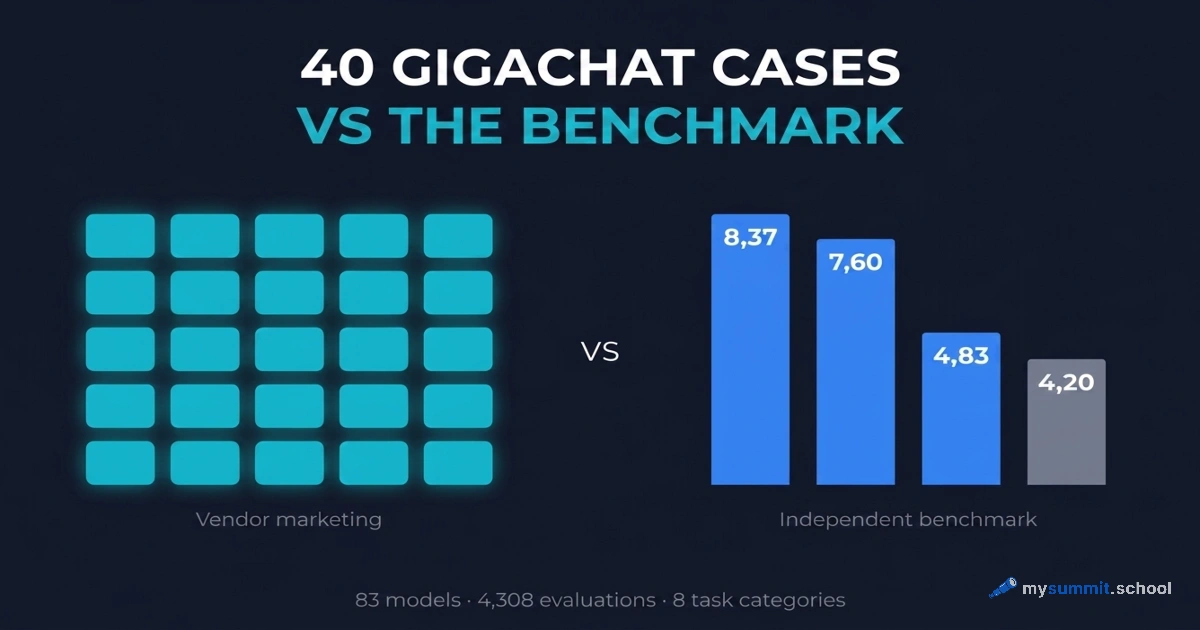
This week, Sber unveiled GigaChat Ultra – a new flagship model with a reasoning mode (Thinking). The model is available for free via web, mobile apps, and a Telegram bot. We immediately added both variants to our AI model research for managers: ran them through all 32 scenarios using our unified methodology, scored them with both LLM judges, and compared against the other 52 models.