Stanislav Belyaev

Stanislav Belyaev

Engineering Leader at Microsoft

> 18
years of experience
2 000+
engineers
700+
graduates
9/10
course rating
Explore the course

Career

Microsoft

Building and scaling engineering teams since 2008 – from startups to enterprises with thousands of developers. At Microsoft, doubled build system productivity for 2,000+ engineers. Previously transformed processes for 600+ IT staff at Tochka Bank, cutting delivery times from weeks to days.

Teaching

Co-author and mentor of the IT Project Manager course at Yandex Practicum – 500+ students over three years. Trainer at Stratoplan with a 9/10 course rating. Three years teaching Project Management in IT at Ural Federal University.

mysummit.school

A platform where managers learn to use AI in practice. Concrete skills: from writing prompts and detecting hallucinations to measuring ROI of AI adoption. Text-based format with interactive assignments – learn at your own pace.

What graduates say

You planted the idea that a project manager is not a taskmaster but part of a team created to find bottlenecks and remove complexity so the team can do their best work. I don't know how my career would have turned out with a different mentor.

Yandex Practicum graduate Project Manager

The 8-week program transformed my career path. Learned to balance features vs. tech debt and position my skills in the job market. Now applying it to release planning.

Stepan Mordvinov QA -> Product Management, SPORTSOFT

Very interesting material for me as a team lead – expanded my understanding of how to communicate with the team at all levels. I immediately started applying everything, especially around tech debt.

Anzhalika Novikava Team Lead

Latest articles

Managers and AI: The Most Frequent Users – But Not for Managing
14 min

Managers and AI: The Most Frequent Users – But Not for Managing

Of all the professions that most frequently open Claude, managers came in first. In Anthropic’s survey, they made up 23% of respondents – while accounting for roughly 7% of U.S. employment. Managers are overrepresented among AI users by a factor of three. Now the second number: management tasks make up just about 4% of all sessions. The people who manage are using AI for everything except managing.

Behind these two numbers lies the most precise description of how managers actually work with AI. And why the fear of “it will take my job” works differently in this profession than you might expect.

5 Layers of an AI Agent: What Every Manager Needs to Know
19 min

5 Layers of an AI Agent: What Every Manager Needs to Know

“Most people still think an AI agent is just ChatGPT with a good prompt.” That is the opening line of Sunil Ramlochan’s article “The AI Agent Stack Is Not a Prompt. It’s a Production System”, and the author calls this belief “a comforting myth.” The useful truth, he argues, is different: a real agent is closer to a small operating system for getting work done. It has a brain, hands, memory, rules, logs, recovery plans, and someone accountable when the agent does the wrong thing.

The article’s thesis fits in a single line: an agent is an entire stack. Reliability comes from the architecture around it, while the model itself – or a clever prompt – is just one ingredient. The picture is an engineering one, so let us approach it from the other side: what in this stack actually concerns the manager who does not write code but decides whether to put an agent to work.

Why AI Pilots Die Between the Demo and the Factory Floor
11 min

Why AI Pilots Die Between the Demo and the Factory Floor

The pilot was shown at the board meeting, everyone applauded, budget was approved for ‘scaling.’ Six months later, the computer vision system that caught 98% of defects during the demo is catching maybe half, quality inspectors have stopped trusting it, and the project has quietly migrated into the ‘deferred initiatives’ column. This is not a rare mishap or the fault of a particular integrator. According to RAND, this is how more than 80% of corporate AI projects end – and almost always for reasons that were visible before the project even started.

40 GigaChat Case Studies vs the Benchmark: Checking Sber's Numbers
23 min

40 GigaChat Case Studies vs the Benchmark: Checking Sber's Numbers

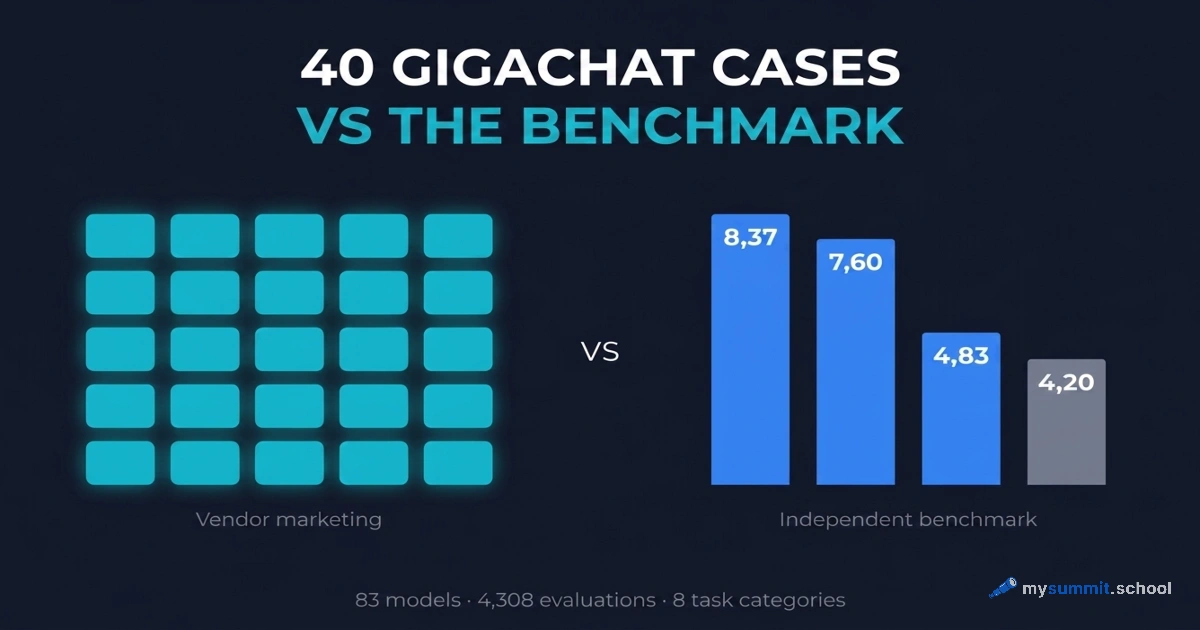
Sber, Russia’s largest bank and the company behind GigaChat, released a sponsored showcase: forty business cases from companies that deployed GigaChat and reported the results. EdTech, MedTech, HRTech, cybersecurity, PropTech. Polished cards, concrete numbers, real startups.

Sber’s promotional project

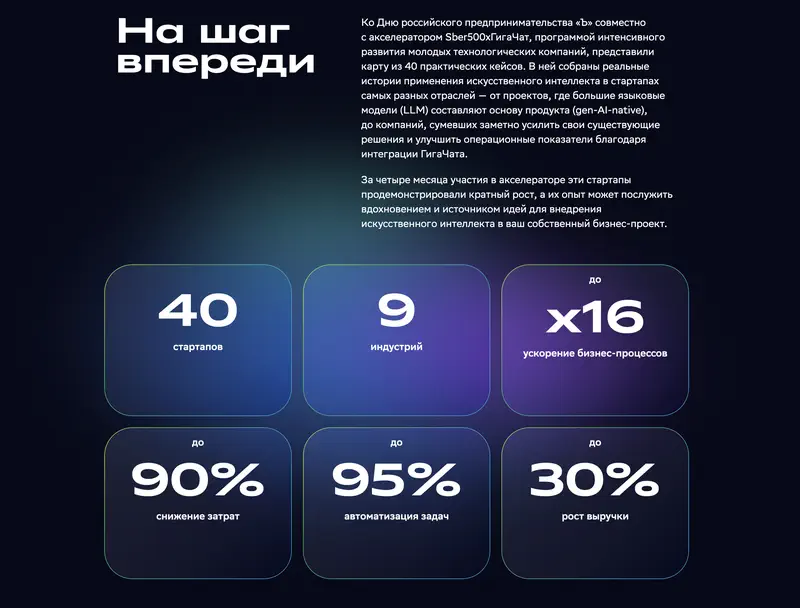
On the image: the “One step ahead” promo slide from the Sber500×GigaChat accelerator – 40 startups across 9 industries. Claimed effects: business processes up to x16 faster, costs down by up to 90%, up to 95% task automation, and revenue up by up to 30%.

We have a benchmark of our own: 29 models, 4,308 independent evaluations on managerial tasks. In it, GigaChat sits dead last – 29th out of 29 after the second wave of testing. That creates an interesting situation.

Not because Sber is lying. The cases are real, the startups exist, the automation works. The question is different: was this the optimal model for the tasks they were solving?

How to Implement AI in Manufacturing: A Step-by-Step Guide for Plant Leaders
26 min

How to Implement AI in Manufacturing: A Step-by-Step Guide for Plant Leaders

A shift supervisor at a mid-size machining plant spends 40 minutes every morning filling out the shift report. Manually copying equipment readings into a Word template, describing incidents in free text, cross-checking the safety log. This routine has existed since the 1970s and hasn’t changed by a single minute. AI can cut it to ten. The hard part isn’t the technology. The hard part is knowing where to start.

280x Cheaper in Two Years: The AI Economy Has Flipped
9 min

280x Cheaper in Two Years: The AI Economy Has Flipped

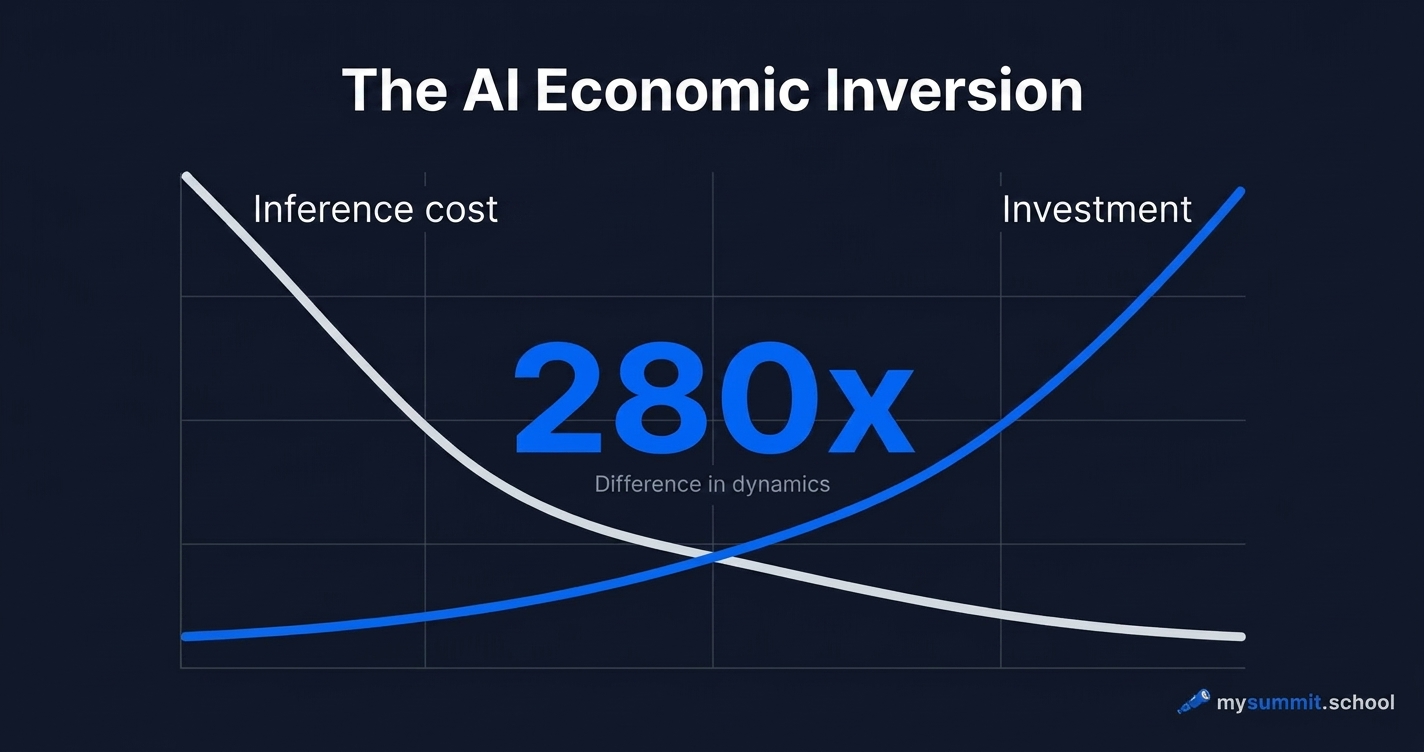
In 2023, a single query to GPT-4 cost enough that you had to count carefully. In 2025, the equivalent query became 280 times cheaper. Not 280 percent – 280 times. In two years, the cost of using AI went from a barrier to a rounding error.

Stanford AI Index – the annual report that compiles data on the AI industry from hundreds of sources – flagged this collapse in its 2025 edition. The 2026 report added context: AI investment exploded to $285.9bn, consumers are extracting $172bn of value a year, and data centres are eating electricity at the scale of New York State. The economy flipped – just not the way most people expected.

Course program

Learn how to systematically master AI for management tasks

Course program