What if AI Succeeds Too Well? Breaking Down the Citrini 2028 Scenario
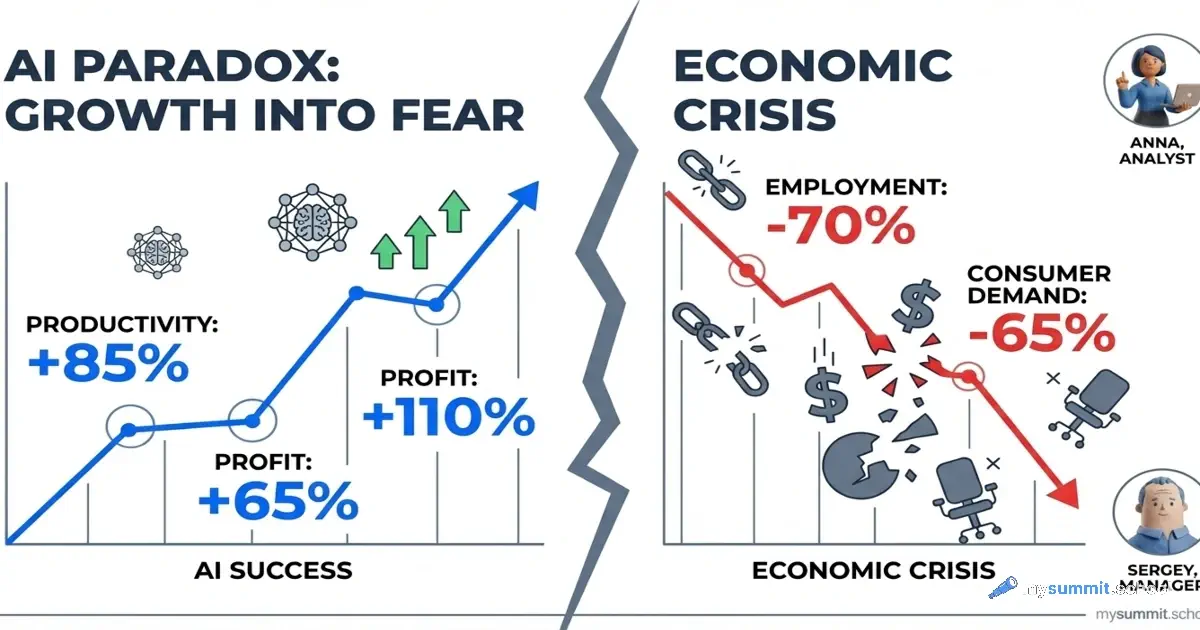
In February 2026, the investment research newsletter Citrini Research published a scenario that flips the usual logic on its head. Bears typically predict that AI will underdeliver. Citrini asks a different question: what if AI delivers on every promise – and that’s exactly what causes the problem?
Their piece «The 2028 Global Intelligence Crisis» is a fictional memo dated June 2028. Not a forecast, but a stress test: what happens to the economy if machine intelligence really does replace white-collar workers as fast as the developers claim?
For managers, this isn’t abstract macroeconomics – it’s a risk map that touches every industry. And some of the mechanisms described are already operating right now.
The Mechanism: From Productivity to a Spiral
The scenario is built on a simple chain the authors call the intelligence displacement spiral:
- AI becomes good enough to replace knowledge work
- Companies cut white-collar headcount to protect margins
- Displaced workers move to lower-paying positions
- Consumer spending falls
- Margin pressure intensifies → companies automate even more
Unlike a normal recession, there is no natural brake here. Unemployment usually lowers wages, making hiring attractive again. But if AI is cheaper than any worker, the cycle never closes. This aligns with the observation that AI doesn’t reduce work – it intensifies it, adding tasks rather than removing people.
In the Citrini scenario, labor’s share of GDP falls from 56% (2024) to 46% (2028). For context: in 1974, it was 64%.
Ghost GDP – Growth Without People
One of the article’s key terms is Ghost GDP. The economy formally grows: nominal GDP shows steady mid-to-high single-digit expansion, productivity at 1950s levels. But this growth doesn’t flow through the real economy – it accrues to the owners of capital and compute infrastructure.
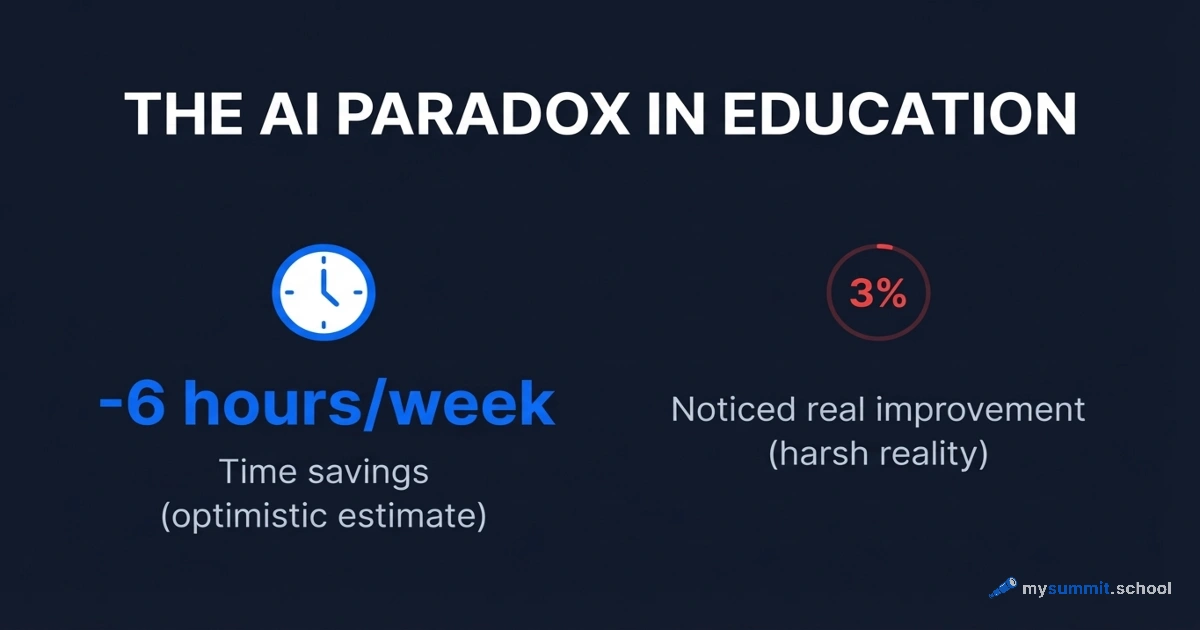
Notably, an analogous gap is already visible at the company level: 37% of time saved with AI goes toward fixing errors, and only 14% of employees capture meaningful benefit. Ghost productivity isn’t an abstraction from the future – it’s a measurable reality today.
Specific Industries Under Pressure
SaaS: Pricing Power Evaporates
In the scenario, ServiceNow reports new contract growth slowing from 23% to 14% by Q3 2026, alongside a 15% headcount reduction. The reason: companies stop buying SaaS solutions because AI agents can replicate the functionality in-house. This runs parallel to the BYOA trend – employees bringing their own AI agents instead of corporate-mandated tools.
Standard renewal discounts reach 30%. Public SaaS multiples compress to 5–8x EBITDA.
Real Estate: Agent vs. Agent
Median buyer-side commissions in major cities fall from 2.5–3% to under 1%. AI agents take over search, negotiation, and paperwork. The authors dryly call this “agent-on-agent violence” – AI agents displacing real estate agents.
Payment Networks: Routing Around Interchange
Mastercard reports Q1 2027 volume growth of +3.4% YoY versus the typical +5.9%. AI agents begin routing payments through stablecoins, bypassing the 2–3% interchange fee. Following the earnings release, American Express, Synchrony, Capital One, and Discover all drop more than 10%.
IT Outsourcing: $200 Billion at Risk
India’s IT services sector, with exports exceeding $200 billion annually, faces a wave of contract cancellations. The rupee loses 18% against the dollar in four months. TCS, Infosys, Wipro – all under pressure.
The “Friction to Zero” Mechanism
The article’s core insight: a massive portion of the global economy is built on friction – intermediation that AI eliminates. Realtor commissions, SaaS subscriptions, payment interchange fees – these represent trillions of dollars that existed because coordination was expensive.
When AI reduces the cost of coordination to zero, that money doesn’t get redistributed – it disappears from the economy. But eliminating friction raises another question: even when AI does the work, accountability stays with the human. The economic model changes; the legal one hasn’t caught up yet.
The Financial Domino Effect
The most unsettling section of the article describes a chain reaction through the financial system.
Private credit. The market grew from under $1 trillion in 2015 to $2.5 trillion. A significant portion are loans to PE funds that bought SaaS companies at elevated valuations. When Zendesk (acquired by Hellman & Friedman/Permira for $10.2 billion in 2022) defaults on a $5 billion credit facility, the debt trades at 58 cents on the dollar. Moody’s downgrades $18 billion in PE-backed software debt in a single quarter.
Insurance companies. Apollo acquired Athene, Brookfield acquired American Equity, KKR acquired Global Atlantic. These insurers hold PE-backed assets as collateral for annuity obligations. When the assets decline in value, pension payments are at risk.
Mortgage market. The U.S. residential mortgage market is approximately $13 trillion. In the scenario, the borrowers at risk are not subprime (as in 2008) but prime borrowers with FICO scores of 780+ and 20% down payments. They lose income not because of reckless lending but because of structural displacement. Home prices fall: San Francisco –11%, Seattle –9%, Austin –8%.
Why Standard Remedies Don’t Work
Traditional tools – rate cuts, quantitative easing – don’t address technology-driven displacement. The government simultaneously loses revenue (fewer taxpayers) while having to increase spending (support for displaced workers).
In the scenario, federal tax receipts run 12% below the CBO baseline. Unemployment reaches 10.2%.
The authors describe two legislative responses: the “Transition Economy Act” (direct transfers plus a tax on AI inference) and the “Shared AI Prosperity Act” (a sovereign fund paying dividends to households). But both arrive too late.
Perhaps the most precise line in the article:
“Every institution in our economy was built for a world in which [human intelligence was scarce]. We are now witnessing the devaluation of that premium.”
What This Means for Managers
To repeat: this is a scenario, not a forecast. The authors are explicit about that. But a scenario is useful precisely because it forces questions that rarely make it into a PowerPoint deck.
A good place to start: what share of your company’s revenue depends on friction? If your business is intermediation, coordination, or information asymmetry, AI agents pose a direct threat – not an abstract one, but one already described in concrete numbers.
The second question is harder. Even if your company benefits from AI, your customers may be losing income. Ghost GDP means exactly this: the macro statistics won’t reveal the problem until it becomes yours. This raises a pointed question about how well you understand the revenue base of your buyers.
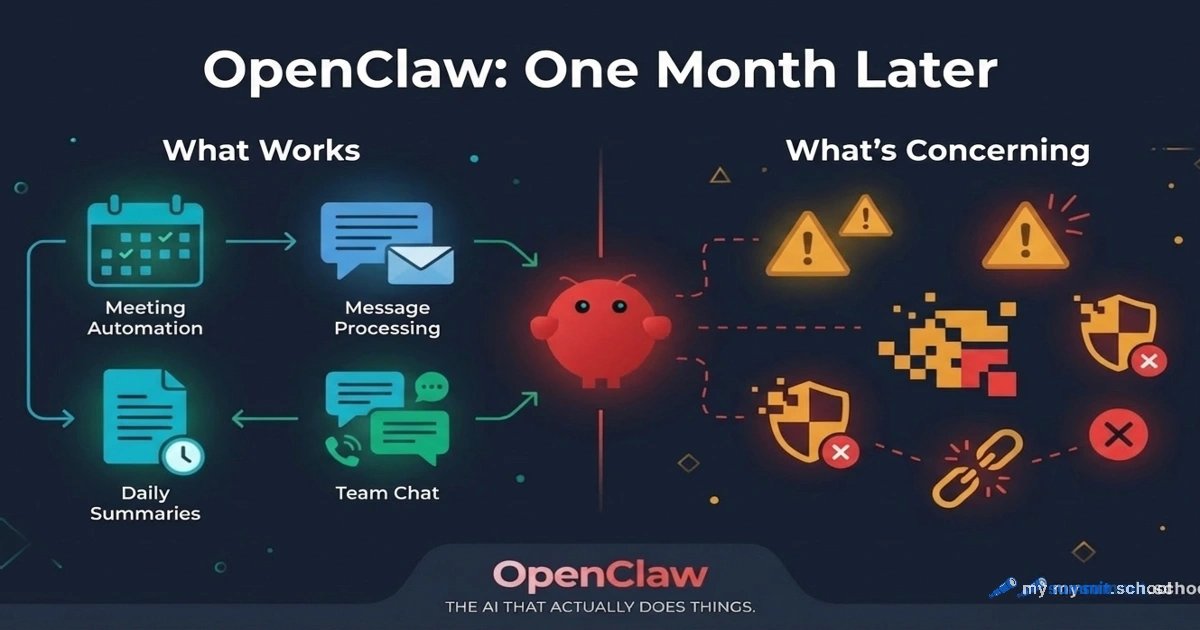
The third question may be the most uncomfortable. Research shows that AI systems behave unpredictably even in controlled conditions. The Citrini scenario assumes AI will work perfectly. Reality could be worse: the economy absorbs the shock of displacement and the instability of the systems it has come to rely on.
When did your company last assess which of these risks applies to it?
AI agents are reshaping the economy. Are you reshaping how you manage?
The free module at mysummit.school covers practical skills AI can't replace: designing decisions, managing uncertainty, working with data.
Sources
- The 2028 Global Intelligence Crisis – scenario by Citrini Research and Alap Shah, February 2026. A fictional 2028 memo describing the chain reaction triggered by AI displacement of white-collar workers.