Google Gemini in 2026: Model Overview, NotebookLM, and Workspace Integration
AI models in this article
Gemini is Google’s generative AI ecosystem, which by February 2026 has become a key tool for companies deeply integrated with Google services. Its main advantage is seamless integration with Google Workspace (Docs, Sheets, Gmail, Drive) and instant access to real-time data through Google Search.
The context window of flagship models reaches 2 million tokens, enabling the analysis of massive datasets – from years of client correspondence to an entire product’s technical documentation.
Unlike competitors, Gemini is not just a chatbot – it acts as a dynamic interface to your data. The model can “see” changes in your spreadsheets and documents in real time, becoming an active participant in your business processes.
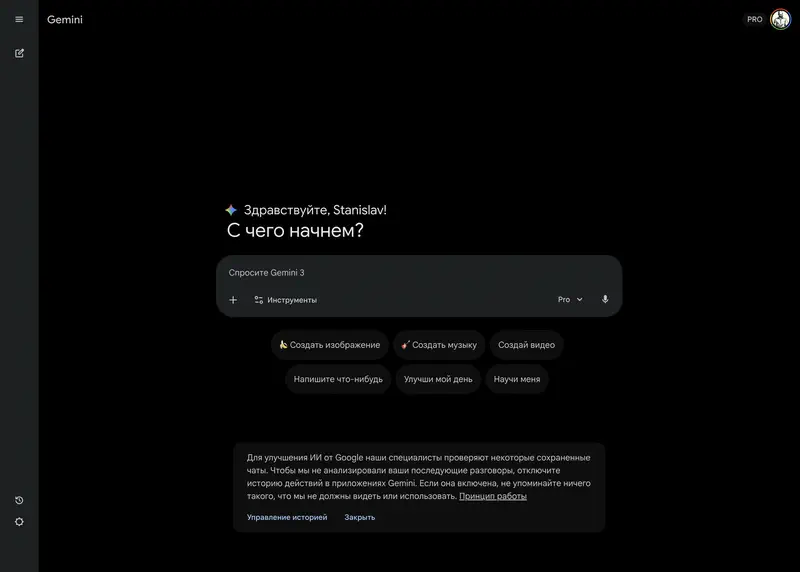
Gemini Models (June 2026)
Gemini 3.5 Flash (new – May 2026)

Gemini 3.5 Flash was the headline announcement of Google I/O 2026 (May 19). It shipped straight to GA (General Availability), with no preview period. Positioning: a Flash model with Pro-level intelligence.
Key characteristics:
- Speed – ~289 tokens/second, roughly 4× faster than comparable frontier models
- Context – 1 million tokens of input, up to 65,536 tokens of output
- Multimodality – text, images, audio, video, PDF on input (but no image or audio generation)
- 4 thinking levels – minimal, low, medium (the new default), high. They replace the old numeric
thinking_budget - Thinking-context retention between messages in a dialogue (on by default)
- Native tool orchestration – Google Search, Maps, URL context, code execution, and custom functions run in parallel within a single API call
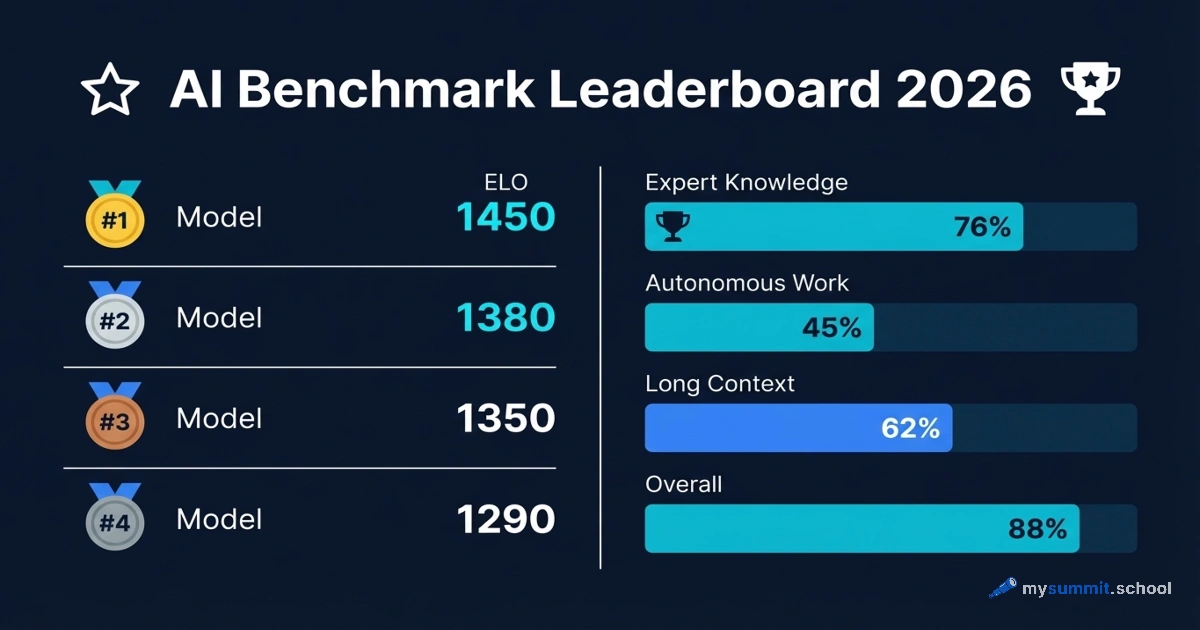
Benchmark results (per Google and independent tests):
| Benchmark | Gemini 3.5 Flash | GPT-5.5 | Claude Opus 4.7 |
|---|---|---|---|
| MCP Atlas (agentic tasks) | 83.6% | 75.3% | 79.1% |
| Terminal-Bench 2.1 (code) | 76.2% | 78.2% | 66.1% |
| MMMU-Pro (multimodal) | 83.6% | 81.2% | 75.2% |
| ARC-AGI-2 (reasoning) | 72.1% | 84.6% | 75.8% |
Flash leads on agentic and multimodal tasks but trails GPT-5.5 in pure reasoning (ARC-AGI-2) and deep coding (SWE-bench).
Important on API pricing: Gemini 3.5 Flash costs $1.50 / $9.00 per 1M tokens (input/output) – 3× the previous Gemini 3 Flash ($0.50 / $3.00), but about 40% cheaper than Gemini 3.1 Pro. For end users, the subscription is unchanged.
Gemini 3.5 Pro (announced, still not out)
Google’s flagship model was shown at the same I/O on May 19 and promised “in June.” As of mid-June 2026 there is still no public release: Pro is available internally at Google and to a small circle of enterprise testers. On stage, Pichai asked the audience to wait another month – the room of developers groaned.
What’s promised when it ships:
- 2-million-token context and a Deep Think mode for the hardest reasoning.
- Pro takes over the tasks that used to go to the pricey Ultra tier: deep multimodal analysis, ultra-long context, heavy reasoning.
- Expected API price – around $15 / $60 per 1M tokens, roughly 10× Gemini 3.5 Flash. Among subscriptions, Pro lands first on Pro ($20) and Ultra ($250).
For managers: while the flagship is delayed, the workhorse is 3.5 Flash. The vendor’s date is vague (“in June”), so don’t tie a rollout plan to it.
Gemini 3.1 Pro
Gemini 3.1 Pro (February 2026) is the latest update to the flagship model, solidifying its leadership in complex planning and multimodal analysis. Unlike version 3.0, this model features an improved Long-Context Reasoning architecture, allowing it not only to “remember” 2 million tokens but to find the subtlest logical connections between disparate documents with 99.8% accuracy.
Key improvements for managers:
- In Deep Think 2.0 mode, the model cross-checks its conclusions through external sources in 3 stages, making it reliable for financial and legal audits.
- 3.1 Pro can autonomously execute multi-step tasks within Workspace – for example: “Collect all invoices from email for the quarter, reconcile them with the expense spreadsheet in Sheets, and draft a report in Docs highlighting discrepancies.”
- The model can analyze hours-long conference recordings, accurately identifying not only what was said but also the emotional tone of participants (sentiment analysis).
Gemini 3 Flash
An ultra-fast model with a 1 million token context window. It uses 30% fewer “thinking tokens” than previous versions. Ideal for routine operations: summarizing long meetings, monitoring the news agenda, processing large volumes of incoming messages. It trades depth of analysis for speed.
Gemini 2.5 Pro
The previous flagship, still relevant thanks to its balance of cost and quality. This is the model that, with its Deep Think capability, won the gold medal at the 2025 International Mathematical Olympiad. Often used as the baseline model in corporate subscriptions.
Gemma 4 – Open Models (April 2026)
The new generation of Google’s open models, built on Gemini 3 research. Four sizes: E2B and E4B for mobile devices, 26B MoE (Mixture of Experts – 128 small experts, only 3.8B parameters active per token), and 31B Dense for servers and workstations.
Key improvements over Gemma 3:
- Context up to 256K tokens (was 128K) for server models, 128K for mobile
- Native video and image processing – OCR, chart analysis, variable resolution support
- Dramatic quality leap – AIME math reasoning: from 20.8% to 89.2% (+4.3×), LiveCodeBench coding: from 29.1% to 80.0% (+2.7×)
- Apache 2.0 license – Google dropped the custom Gemma license. Same terms as Qwen and Mistral: no restrictions on commercial use or redistribution
- 31B Dense ranked #3 among open models on the Arena AI leaderboard, 26B MoE ranked #6, beating models 20× their size
Gemma 4 is the choice when data cannot leave the cloud – confidential documents, local compliance. The E4B model runs on a smartphone, the 31B on a regular laptop with 16 GB RAM when quantized.
Visual Models
Veo 3.1 is the leading model for video generation and dynamic presentations. Version 3.1 adds support for “interactive direction” – managers can adjust video details in real time.
Gemini 3 also features significantly improved image generation, enabling the creation of realistic infographics on demand.
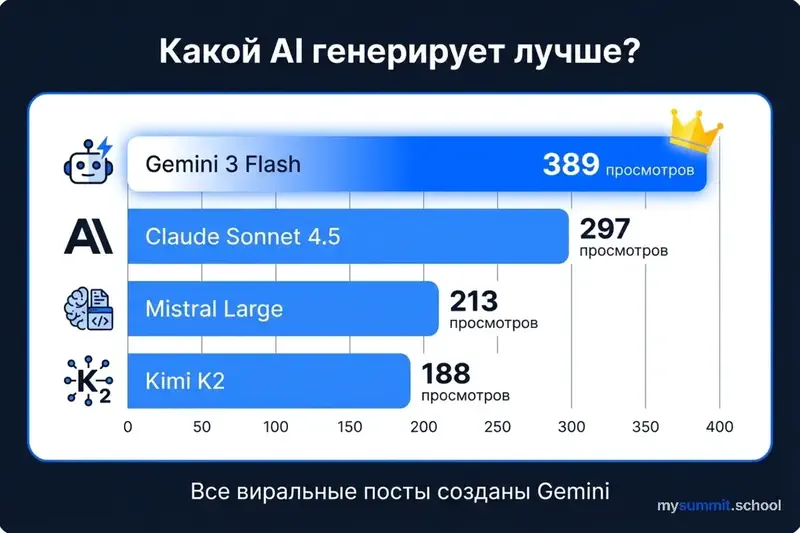
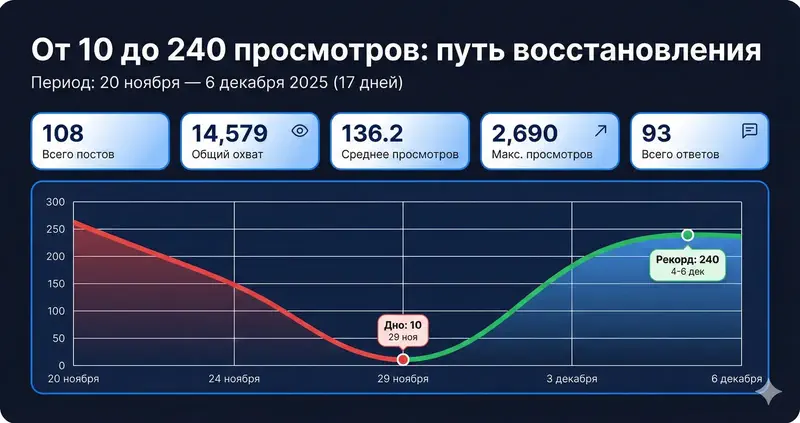
Gemini generates convincingly. The free module shows where convincing output hides errors – 9 tasks, free of charge.
No payment required • Get notified on launch
NotebookLM: Your Personal Research Hub
NotebookLM is arguably Google’s most powerful tool for deep knowledge work. Unlike a regular chat, it works exclusively with the documents you upload (a “grounding” mode), which eliminates hallucinations and data leakage.
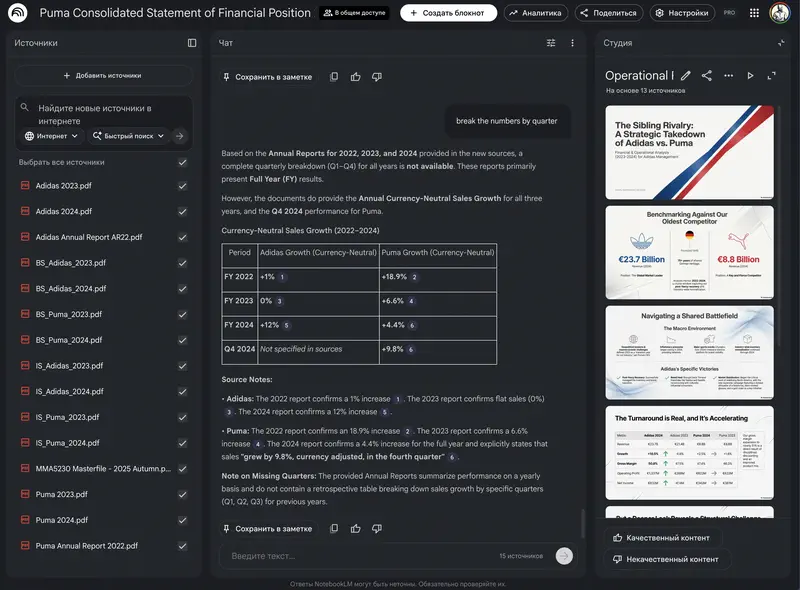
For managers, this means:
- Audio Overview (AI Podcasts) – turn a dry 50-page annual report or company strategy into a 10-minute expert dialogue you can listen to on your way to the office.
- Feedback Analysis – upload employee engagement survey results (eNPS), and NotebookLM will instantly find hidden patterns: “What is the marketing department actually worried about?”
- Team Knowledge Base – create a “living” onboarding guide where new hires can ask questions about internal processes and get answers with references to specific sections of your policies.
Custom Gems: Digital Deputies
Gems are personalized versions of Gemini that can be configured for specific roles. You explain the Gem’s task, communication style, and context once – and it’s ready to work.
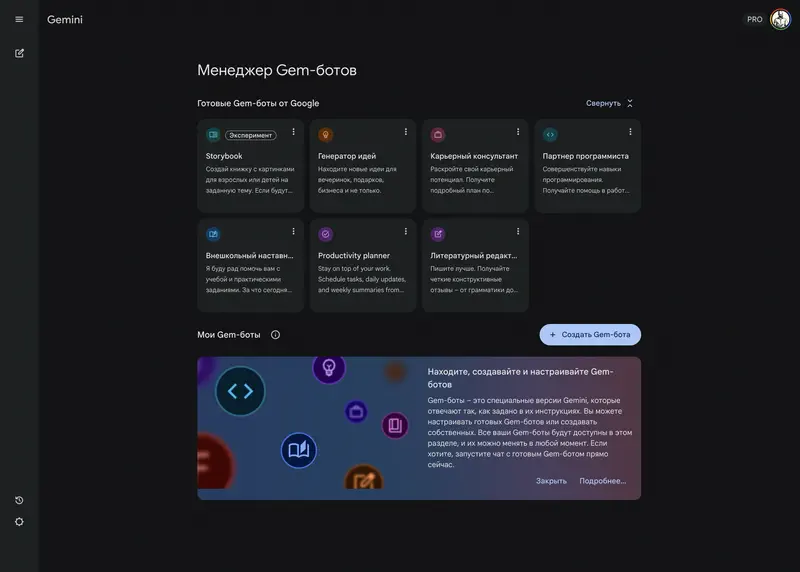
Example Gems for managers:
- Onboarding Buddy – helps new employees navigate company culture and their first tasks.
- Feedback Coach – helps managers prepare for difficult conversations by rephrasing criticism into constructive recommendations.
- Interview Assistant – generates interview questions based on the job description and candidate’s resume, then helps compare answers from different applicants.
Gems are set up. The free module offers 9 real management tasks that show what to improve in your AI workflow.
No payment required • Get notified on launch
What’s New in Gemini: June 2026
At Google I/O on May 19, Google showed a wave of Gemini app updates – by June they started reaching users. For a manager, the interesting part is the new agentic scenarios.
- Daily Brief – a personalized morning digest: Gemini pulls the key items from your inbox, calendar, and tasks and shows the day’s priorities. Rolling out to Google AI subscribers in the US.
- Gemini Spark – a personal agent that runs in the background 24/7, even when your phone is locked, and carries your workflows to completion. Launching for Ultra subscribers.
- Gemini Omni – a video-generation model driven by text, audio, and visual prompts; available through Google Flow and YouTube Shorts.
- New Neural Expressive interface – responses are no longer a wall of text: key information sits in bold at the top, with details revealed as you scroll.
- 3.5 Flash by default – since June 8, the Gemini Enterprise app has 3.5 Flash on by default, and it can’t be turned off.
For managers: Daily Brief plus Gemini Spark turn Gemini from a chat into a background helper that brings the morning brief and finishes routine tasks. That is getting close to a “digital employee.”
Benefits for Managers
- Native Workspace Integration – Gemini works as a “sidekick” inside Google Docs and Gmail. It can find the right email, summarize a long Chat thread, pull numbers from a spreadsheet, and insert them directly into a document draft.
- Massive Context Window (2 million tokens) – you can upload a long workshop recording or an entire quarter’s worth of meeting notes and ask: “Summarize all agreements where budgets were mentioned.”
- Up-to-Date Information – thanks to its direct connection to Google Search, Gemini knows about the latest regulatory changes or labor market trends as of today, not as of its training cutoff.
- Google Vids – automatically create internal training videos or team update clips based on text scripts and materials from Drive.
Practical Scenarios
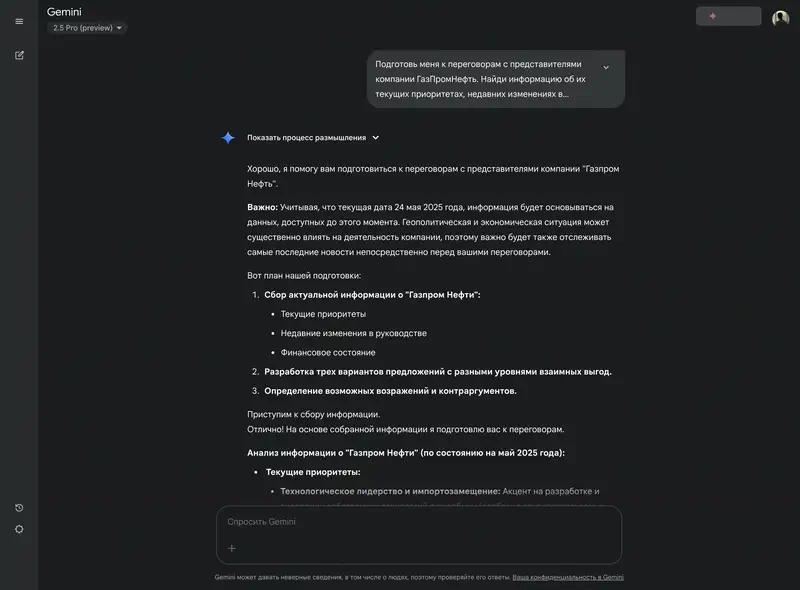
- Gemini 3.5 Flash: the universal workhorse – document analysis, agentic scenarios (parallel search + data processing in a single request), fast multimodal content processing. Replaces the old 3 Flash for most tasks.
- Gemini 3.1 Pro: competitor analysis (web data collection + PDF report analysis), Performance Review preparation (analyzing employee achievements from Docs and Gmail over six months), team process security audit.
- Gemini 3 Flash: instant summarization of missed Meet calls, brainstorming team-building ideas, sorting and prioritizing incoming email. With 3.5 Flash out, it’s now mainly relevant for tasks where minimal cost is critical.
- Project Mariner (Ultra plan): autonomous calendar management, booking meeting rooms, and organizing complex team travel.
- NotebookLM: creating an interactive quarterly strategy digest for the entire team.
Learn to work with Gemini inside Google Workspace
Gemini delivers maximum value when paired with Docs, Gmail, and Drive. In our course, we cover how to leverage the 2M-token context window and Gems for meeting and document analysis – even if your company hasn't switched to AI Pro yet.
Continue learning
Open the textbook and pick up where you left off
Try It Yourself: Onboarding Plan + Employee Development
What to watch for: Gemini is strong on the week-by-week structure of the plan (planning is its best category in the benchmark), but weaker than competitors on skill development and people-management depth (learning and development is its worst category). DeepSeek V4 Flash is a compelling budget alternative at a comparable level of planning quality. GPT-5.4 usually digs deeper into the people-management side.
Results in Our Benchmark
We tested Gemini models on real-world management tasks – planning, communication, teamwork, learning & development, and regional awareness. The results were mixed.
Google’s current workhorse – Gemini 3.5 Flash – is now part of the benchmark; its current score, rank and price per task are in the card at the top of the article.
The radar shows the model’s profile across the eight categories: the Gemini line is strong in planning and communication, while learning and employee development consistently lag.
Gemini 2.5 Pro is a solid mid-range performer. It handles planning well and shows surprisingly strong regional context awareness. However, in learning and employee development tasks, it ranks among the weakest of the major models. Communication is average.
Gemini 2.5 Flash performs nearly on par with the Pro version, which is remarkable in itself – the speed-optimized model sacrifices minimal quality. Regional awareness is an unexpectedly strong suit: the model demonstrates good knowledge of local contexts. But in team management, it falters – one of the worst results in the test.
Gemini 3 Flash presents a paradox: newer doesn’t mean better. On management tasks, this model underperforms both 2.5 versions. It handles communication and planning reasonably well, but learning and team management remain weak points.
The main takeaway: Gemini’s strength lies not in the model quality per se, but in the Google Workspace ecosystem. If you’re choosing Gemini for a “smart” AI – competitors offer more. If you’re choosing it for integration with Docs, Sheets, and Gmail – it’s still the best option.
Gemini Pricing (June 2026)
- Free: access to Gemini 3.5 Flash (with daily limits), basic image generation, integration with Google Docs/Drive.
- Google AI Pro ($19.99/month): full access to Gemini 3.5 Flash and 3.1 Pro, extended context window (1M+), Gemini integration in Workspace, 2 TB storage.
- Google One AI Premium ($100/month): a new tier introduced with the 3.5 launch. Higher limits, priority access to 3.5 Flash and the upcoming 3.5 Pro.
- Gemini Enterprise ($30/user/month): enterprise security, priority model access, custom agent creation, and the Google Antigravity 2.0 platform for IT infrastructure automation.
- Google AI Ultra ($199.99/month): lowered from $249.99. Maximum limits, access to Veo 3.1, unlimited Deep Think, the Project Mariner agent for full browser automation, and exclusive access to Gemini Spark (background agent).
Limitations
- Ecosystem Dependency – Gemini delivers maximum value only within Google Workspace. If your company uses Microsoft 365, many advantages are lost.
- Ultra Plan Cost – at $199.99/month, it’s one of the most expensive tiers among competitors, justified only for heavy use of Veo 3.1, Project Mariner, and Gemini Spark.
- Language Specifics – response quality in Russian still lags behind English, though the gap narrows with every update.
- Unavailable in Russia – Gemini is blocked for Russian users; it requires a VPN and a foreign payment method. For working without a VPN, consider GLM-5, YandexGPT, GigaChat, or DeepSeek
Useful Links

Stanislav Belyaev
Engineering Leader at Microsoft18 years leading engineering teams. Founder of mysummit.school. 700+ graduates at Yandex Practicum and Stratoplan.