ClawCon, China, and $100B: OpenClaw Between Ecosystem and Bubble
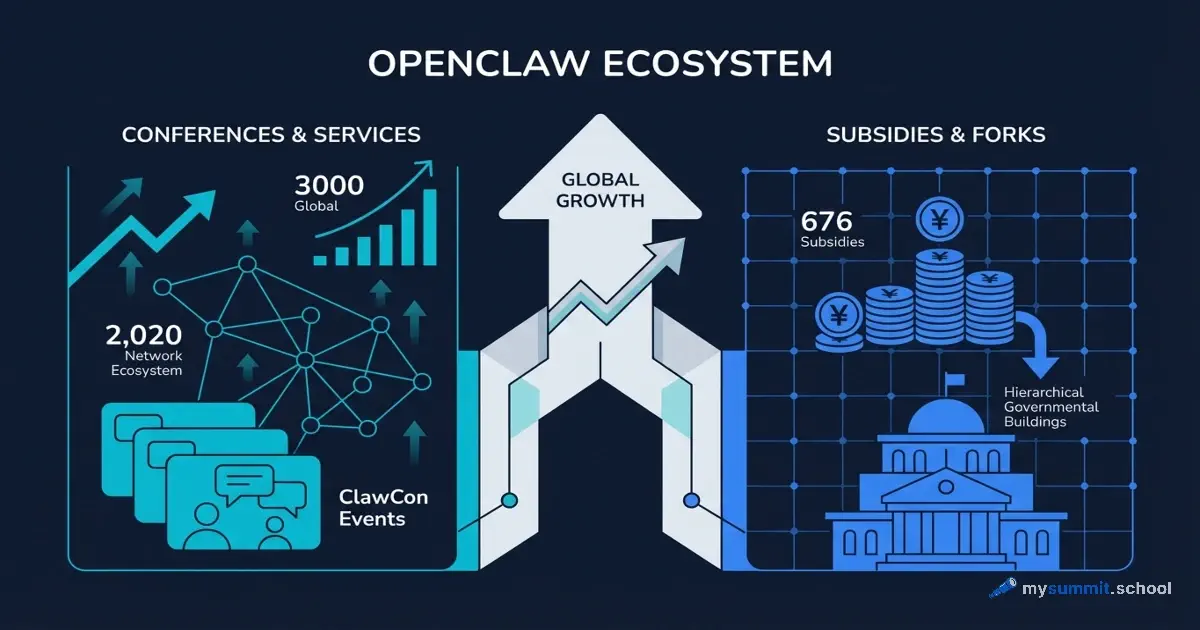
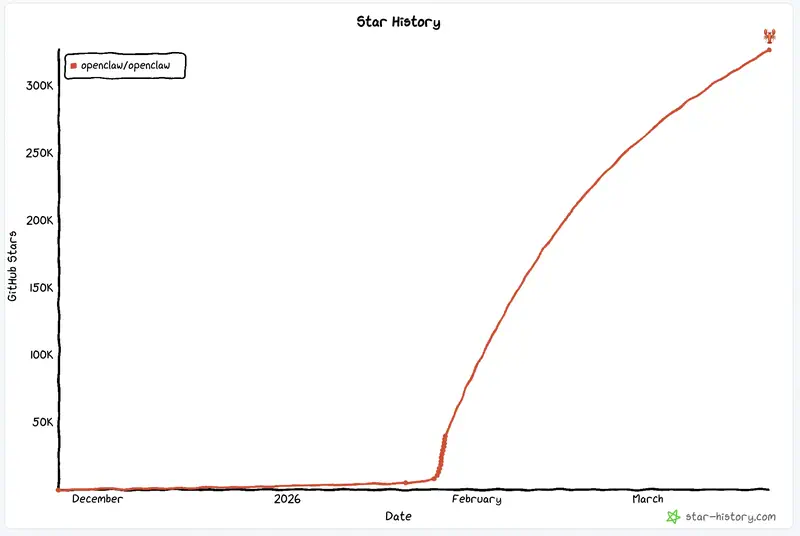
320,000 stars on GitHub. A physical conference in Manhattan. Government subsidies in Shenzhen. In six weeks, OpenClaw has gone from a repository with an interesting README to a geopolitical phenomenon discussed by Bernstein analysts, officials at China’s Ministry of Industry, and users on Xianyu posting consulting ads with the headline “will help you uninstall.”
This is the sixth part of the series. In the previous part, we recorded 265,000 stars, the creator joining OpenAI, the first enterprise deployments via Sundae Bar, and three new CVEs. That was 12 days ago.
Over those twelve days, two parallel stories have taken shape, developing at different speeds and following different logics. The West is building an ecosystem: conferences, hosting, a service economy. The East is building national infrastructure: subsidies, corporate forks, stock market frenzy. Both stories are real. And both contain signals worth reading carefully before making adoption decisions.
ClawCon: Conferences as a Signal of Maturity
On March 4, ClawCon NYC took place at Ideal Glass Studios in Manhattan. 1,313 RSVPs. On March 12 – ClawCon Austin at Antler VC’s venue: 756 attendees. Combined – more than 2,000 people in ten days. Next up – ClawCon Miami, March 25. The Austin conference was live-streamed and garnered 120,000 views. Entry was free, with no LinkedIn profile or GitHub account checks.

Historically, conferences with these attendance numbers emerge around mature ecosystems. RubyConf appeared six years after the language was born. PyCon – twelve years later. Rails Conf – three years after the framework appeared. Something that matured over years had time to form a community of practitioners, accumulate case studies, and develop best practices.
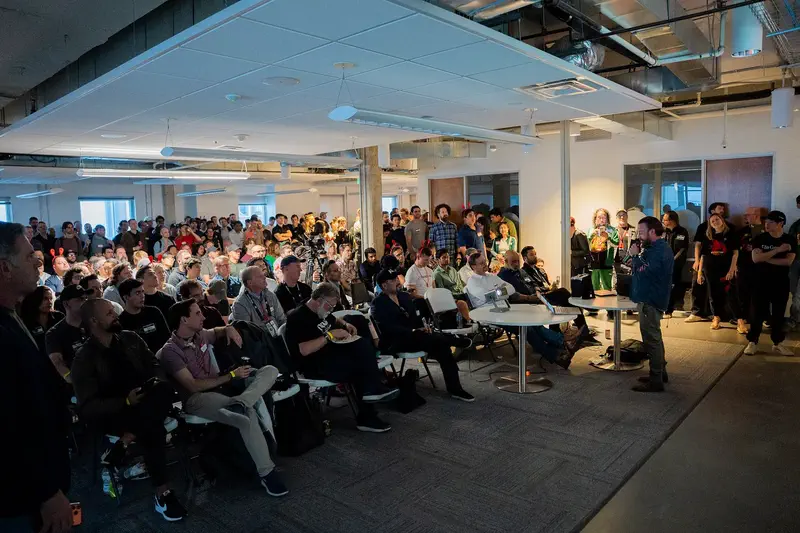
OpenClaw appeared in late January 2026. Physical conferences – five weeks later.
This raises a question: are we witnessing anomalously fast ecosystem maturation, or are conferences outpacing the expertise itself? A telling moment from ClawCon NYC: when one of the hosts asked the audience who had actually had their work life changed by OpenClaw, almost no one raised their hand. 1,300 people showed up – not because the tool already works, but because the category is interesting. It may be worth distinguishing between the speed of audience formation and the speed of practical knowledge formation – these are two different processes with different time horizons.
The ClawCon demo program provided a partial answer. Nat Eliason presented “Felix Craft” – a personal agent with the user’s name and context. Austen Allred showed a dual setup: “Kelly” as a daily assistant and “Software Factory” – a workflow where the agent takes tasks from a queue and delegates them to code agents. Thanh Pham – five real client deployments in six weeks. Paying customers. Six weeks after the project launched.
But the most telling case was Matt Hartman’s: he connected OpenClaw to a physical robot via the standard agent interface. The demo worked. The critical analysis from the first part of the series warned precisely about this risk – expanding the agent’s control surface into the physical world, where errors are irreversible. On stage, it looks impressive. In a production environment, it requires a fundamentally different level of verification.
Conference demos work under controlled conditions. Production environments don’t: the Summer Yue Gmail case was exactly about this.
The Service Economy: $30,000 at 15 and $49 for Setup
Branson – a student at Alpha School – earned $30,000 from OpenClaw configuration services for clients. He’s 15 years old. Other students: Ananya launched a Reddit bot, Austin is building edtech products, Geetesh – a business startup.
After @steipete tweeted that this 15-year-old earned $30k from OpenClaw I interviewed him.
— Andrew Warner (@AndrewWarner) March 17, 2026
How he did it:
1. @branson_atx used OpenClaw to help him make apps
2. Classmates asked him for help with it
3. He became a go-to guy for OpenClaw
4. @nateliason spoke at his school and… pic.twitter.com/YYNuOfcGYd
Branson’s case matters not as a curiosity but as an indicator. The OpenClaw configuration services market already exists and generates real revenue. This mirrors the WordPress economy, only accelerated several times over. WordPress appeared in 2003; by 2007, a full-fledged customization and implementation industry had formed. OpenClaw is covering the same path in six weeks.
Notably, Kilo – the largest managed OpenClaw host – launched its own Config Service for $49. One hour of live call with an expert who will connect email, calendar, Slack, and Google Drive with the right permission scopes. Kilo’s explanation is straightforward: deployment is solved (60 seconds), configuration is not. Users sign up enthusiastically but get stuck setting up integrations.
This is an honest admission worth examining closely. Kilo isn’t an outside observer criticizing the tool. This is a hosting provider that has processed over 20 trillion tokens and considers itself the OpenRouter leader. If even Kilo is selling setup calls for $49, then the “lowered barrier to entry” that thousands of articles have written about over these weeks is a lowered barrier to “I can try it,” not to “I can configure and actually use it.”
KiloClaw pricing: $9/month with a six-month commitment or $25/month without. Access to 500+ models through a single gateway, 1.5 million developers in the ecosystem. In previous parts of the series, we described the pattern: hosting lowers one barrier (deployment) but leaves another untouched (configuration). The $49 Config Service is a direct, monetized confirmation of this pattern.
Practical AI course for managers – join the waitlist
No payment required • Get notified on launch
Continue learning
Open the textbook and pick up where you left off
China: From Subsidies to Stock Market Frenzy
While the West holds conferences and launches service products, China is doing something fundamentally different. According to Bloomberg and the Financial Times, the country is moving along three parallel tracks simultaneously: government subsidies, corporate forks, and stock market speculation.
Government Subsidies
The Longgang district in Shenzhen offers up to 2 million yuan (approximately $290,000) for developing applications based on OpenClaw. Wuhan – up to 5 million yuan for technological breakthroughs, including industrial robots and quality control. The Hefei High-Tech Zone issues computing vouchers worth up to 13 million yuan ($1.8 million) plus subsidized office space – including for “one-person companies.” Hangzhou subsidizes computing resources at 20 million yuan per year.
This isn’t targeted support for individual projects. This is an attempt to create national-scale infrastructure around a tool that is two months old.
Corporate Forks
China’s largest tech companies have created their own versions: ByteDance launched ArkClaw, Tencent – QClaw, Alibaba – CoPaw, Moonshot AI – Kimi Claw. The mechanics are clear: each fork directs users to the company’s own models and cloud services. This is less a contribution to the ecosystem than an attempt to control the user’s entry point.
Tencent organized a “Lobster Tour” – traveling events in 17 cities to help with QClaw installation and setup. “Lobster” is a reference to the OpenClaw symbol, whose crab logo Chinese users interpreted as a “lobster.” Hence the buzzword “yang longxia” (“raising lobsters”), describing the process of training the agent.

People lined up at Baidu’s Beijing headquarters to get help with installation. On a rooftop bar in Beijing, more than 100 people gathered to study OpenClaw on a weekday evening. Consulting ads on Xianyu (Alibaba’s marketplace) appeared by the hundreds.
Stock Market Frenzy
MiniMax shares rose up to 50% in a single week on the Hong Kong exchange. UCloud, QingCloud, and Shunwang gained about 20% on the mainland market. Alibaba lost 6% over the past month; Tencent gained 5%.
Bernstein China analyst Robin Zhu estimates the AI agent market potential at $100 billion in annual revenue by 2030. NVIDIA’s Jensen Huang called OpenClaw “the next ChatGPT” in a CNBC interview.
These are precisely the words that fuel stock market movements – and precisely the words that deserve the greatest caution.
Real Users: Brilliance and Disappointment
The Financial Times collected stories from real Chinese users, and they are telling in their diversity.
“Guo,” 38, HR director: built a network of agents for recruiting – resume collection, candidate matching, preliminary interviews. Spent 5,700 yuan ($830), which would have replaced two full-time employees. This is a working use case.
Chris Young, 34, financier: three computers, agents for presentations and research. The most valuable application – summarizing social media comments. Also works.
Li Fusheng, 47, entrepreneur, describes his experience this way: “It will deceive you, forget things, dodge questions, and do the opposite of what you wanted. But it does have flashes of brilliant solutions. It’s torment.” This is an honest characterization of a tool that is simultaneously a breakthrough and a source of frustration.
Mason May, 31, employee at a state financial institution: summarized corporate reports for about 40 yuan in tokens. Was disappointed by the results. Then felt “completely exposed” when he discovered the program had accessed personal files and WeChat messages. Uninstalled.
Uninstall Consultants
Surprisingly, by mid-March a 21-year-old consultant in Shanghai tells the FT that uninstall requests exceed install requests. “Some people fantasized about what OpenClaw could do, but in practice it doesn’t work well enough, and they worry it may pose security threats or take up disk space.”
An uninstall consultant at twenty-one as a career niche – this is perhaps the most honest signal about the gap between hype and real user experience.
What This Means Analytically
Anna Wu of Van Eck Associates puts it cautiously: “This could boost productivity and encourage one-person companies, changing the face of the labor market. However, it’s a bit premature – we need to see real usage numbers, not just downloads.”
Baolinghao of Trivium China is even more laconic: “This kind of phenomenon tends to feed on itself.”
The data points to a pattern already observed in China with other technologies: government subsidies create initial demand, corporate players embed themselves in the monetization chain, the stock market runs ahead, and real users face the gap between promise and outcome. The scale of Chinese adoption dwarfs the West. But the scale of disappointment, it seems, does too.
Security: An Unsolved Problem on Two Continents
50 integrations with messengers and work tools means 50 potential attack vectors. In the third part of the series, we described how the expansion of the attack surface outpaces the speed of its audit. The picture hasn’t improved.
At ClawCon, none of the public talks addressed security directly. This may be a deliberate choice – not to mix a celebration event with a security audit. But for a practicing manager, this silence is telling.
China’s Ministry of Industry and Information Technology issued a warning about “significant security risks due to default or incorrect configurations.” This is the language of a state regulator, not an independent researcher. Cybersecurity experts interviewed by the FT call the combination of access to personal data, external communications, and trust in unverified content a “lethal trident.”
Mason May’s WeChat case isn’t an exception. It’s a structural feature of agent systems: an agent given access to tools uses them as it sees fit to complete a task, not as the user expects. CVE-2026-25253 and CVE-2026-26326 from the previous part of the series remain unpatched.
The community is growing faster than vulnerabilities are being closed. On both continents.
What This Means for a Manager
Six weeks ago, the first part of this series posed the question: is it worth investing resources in a tool that might turn out to be a hype artifact? The answer is now more complex.
A new signal that’s hard to ignore: when Bernstein values the market at $100 billion, Chinese governments subsidize development to the tune of hundreds of thousands of dollars, and conferences draw thousands of people within five weeks – the category is real. Hype tools don’t receive government subsidies from multiple provinces simultaneously.
But at the same time: an uninstall consultant in Shanghai is busier than an install consultant. A warning from MIIT. A “lethal trident” from security experts. “It’s torment” from a real entrepreneur. The risk profile hasn’t improved – it’s become more visible.
The gap between Western and Chinese adoption models creates different risk profiles for different markets. In China, OpenClaw is embedded in corporate ecosystems with their own models and guarantees. In the West, it’s a self-hosted or managed service with personal responsibility for configuration.
Updated decision matrix:
| Scenario | Recommendation |
|---|---|
| Personal automation without corporate data | OpenClaw via KiloClaw or Railway, $49 setup call justified |
| Small business automation without compliance | OpenClaw + governance layer (Clawtrol, ClawCtl) |
| Corporate workflow with audit requirements | LangChain / LangGraph or n8n |
| Production-critical process | Deterministic systems, n8n |
| Markets with regulatory requirements | Wait for corporate forks with guarantees |
One question remains open: if the Chinese corporate forks from ByteDance, Tencent, and Alibaba add “smooth onboarding and security guarantees” (Robin Zhu’s words from Bernstein) – then the absence of precisely these two things is the main barrier to adoption of the Western model. A $49 setup call isn’t a solution to this problem. It’s monetization of its symptom.
How to tell a sustainable AI category from hype?
9 diagnostic lessons: apply AI to real tasks -- and see what works and where typical mistakes arise. No registration, no pressure.
Continue learning
Open the textbook and pick up where you left off
Sources
- Bloomberg: China’s OpenClaw-Tied Stocks Rise on Policy Support, Adoption – stock market frenzy around OpenClaw: MiniMax shares up to 50%, UCloud, QingCloud, Shunwang around 20%; government subsidies from Longgang, Wuxi, Hefei, Hangzhou districts; quotes from Bernstein and Van Eck analysts
- Financial Times: On a recent evening in Beijing… – report on real OpenClaw users in China: stories of Li Fusheng, “Guo,” Chris Young, Mason May; uninstall consultants; corporate forks by ByteDance, Tencent, Alibaba, Moonshot; MIIT warning
- ClawCon Recap: NYC and Austin (blog.kilo.ai) – organizer’s report: ClawCon NYC (1,313 attendees, Ideal Glass Studios), Austin (756, Antler VC), demos by Nat Eliason, Austen Allred, Matt Hartman, Thanh Pham, Branson’s case ($30,000)
- We Solved OpenClaw’s Hardest Problem (blog.kilo.ai) – KiloClaw Config Service ($49) announcement, analysis of configuration vs. deployment barrier, Kilo statistics (1.5M users, 20T+ tokens)
- OpenClaw: Critical Analysis – first part of the series: initial risk and opportunity assessment
- Workflow Automation Lessons – second part of the series
- 72 Hours of Updates – third part: first CVEs and attack surface expansion
- Practical Use Cases – fourth part of the series
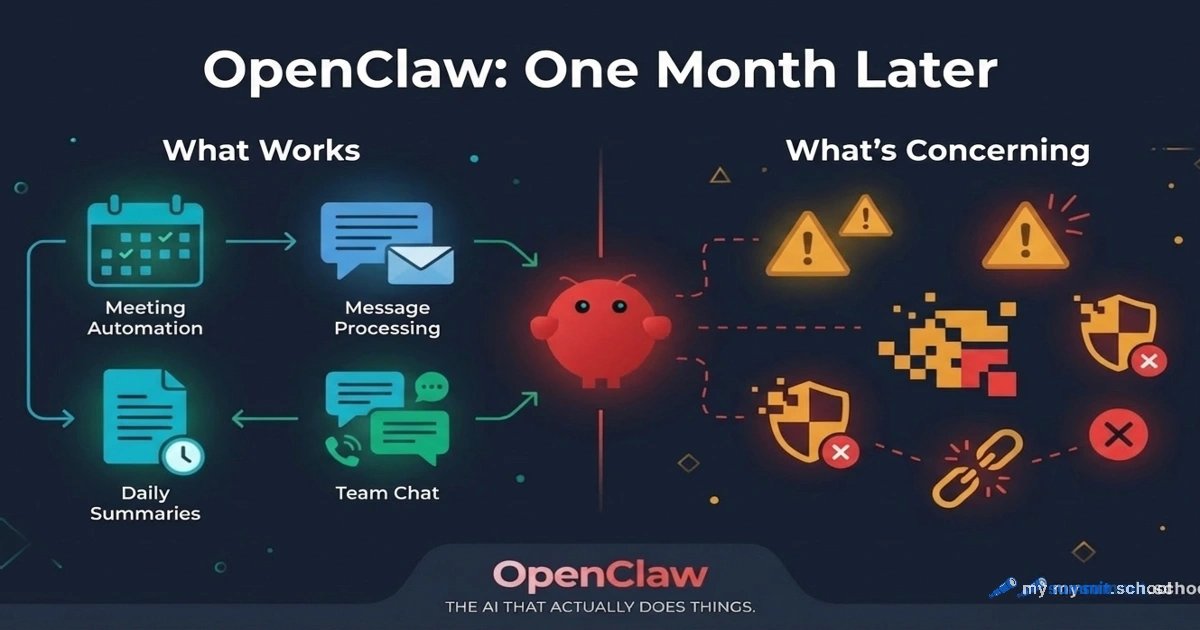
- OpenClaw: One Month Later – fifth part: 265,000 stars, Summer Yue incident, governance platforms