mysummit.school - AI for Managers Blog

GigaChat in 2026: Honest Review – Is It Worth Using for Work?

20 min read

GigaChat is the generative AI model from Sber – Russia’s largest bank, which has spent the last decade turning itself into a technology group. It was built for Russian speakers from the ground up: trained on Russian data, with a solid grasp of the cultural context, slang and everyday realities behind the language. And inside Russia it works without a VPN – which matters there, because ChatGPT, Claude and Gemini don’t officially serve Russian users.

Read more
GigaChat in 2026: Honest Review – Is It Worth Using for Work?
Grok by SpaceXAI in 2026: A Review of Elon Musk's AI
19 min

Grok by SpaceXAI in 2026: A Review of Elon Musk's AI

Grok, built by Elon Musk’s SpaceXAI (formerly xAI), sets itself apart from ChatGPT and Claude in two ways: it skips most of the heavy content filtering (“political correctness”) and it reads the X feed in real time.

In June 2026, SpaceX absorbed xAI and formed SpaceXAI – one company covering rockets, Starlink satellite internet and AI. An agent ecosystem has grown up around the model: the current flagship is Grok 4.6 (August 12, 2026), while Grok 4.5 (June 2026, 1.5 trillion parameters) is the version we have our own measurements for in the mysummit.school benchmark.

Claude by Anthropic in 2026: Opus 5, Fable 5.1, Mythos 5.1, Cowork and Chrome – a Manager's Guide
32 min

Claude by Anthropic in 2026: Opus 5, Fable 5.1, Mythos 5.1, Cowork and Chrome – a Manager's Guide

Anthropic ships a Claude update roughly every two weeks. Look past the version numbers and the question for a manager is simple: what actually changes in day-to-day work? By September 2026 the lineup looks like this. Opus 5 (July 24) became the workhorse at half the flagship’s price. Fable 5.1 (September 1) is the generally available flagship. Mythos 5.1 is the same model with the guardrails off, sold only to approved organizations in the US. Sonnet 5 has been the default on the Free and Pro plans since June 30. And the 1-million-token context window has long been available to every user at no extra charge.

The big story of the summer is what Claude now does on its own. On August 26, Claude in Chrome went generally available on all paid plans and started taking actions in the browser by itself. Cowork got a built-in browser, the Chrome side panel became a shared Cowork session, and a conversation started on your laptop now continues on the web and on your phone.

ChatGPT in 2026: What Changed and Where Managers Should Start
21 min

ChatGPT in 2026: What Changed and Where Managers Should Start

In 2026, calling ChatGPT “a chatbot” undersells it. It is a work platform with several models, search, deep research, an agent mode, image generation and Codex for software development. Sora, the video app that used to sit in the same ecosystem, was shut down as a consumer product in April 2026. All that breadth makes the basic question harder for newcomers: which parts does an ordinary manager actually need, and which still matter only to power users and engineering teams?

KazLLM and Sovereign AI: A Guide for Kazakhstan's Civil Servants
13 min

KazLLM and Sovereign AI: A Guide for Kazakhstan's Civil Servants

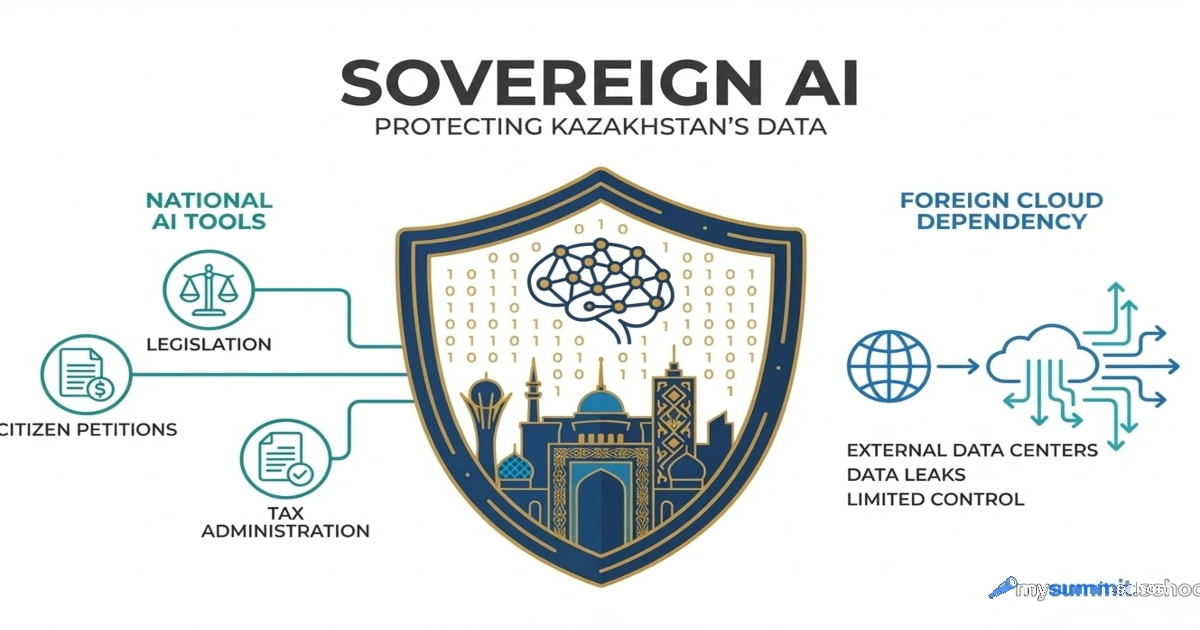
On 11 February 2026, at a government meeting, President Tokayev publicly criticised KazLLM. The model, launched with great fanfare in December 2024, has just 600,000 users – 3% of the country’s population. For comparison: 2.6 million people in Kazakhstan use ChatGPT. The president was blunt: KazLLM “cannot compete with ChatGPT.”

This statement cuts to the heart of the matter. Why does Kazakhstan need its own language model if global solutions work better? And if sovereign AI is necessary – why is it losing?

The answer is more complicated than it seems. Because KazLLM is not “Kazakhstan’s ChatGPT.” It’s a fundamentally different tool with a different mission. Comparing them is like comparing a national power plant with an imported household appliance.