AI Agents

The Agent Instead of Chat: Data Analysis Without Copy-Paste

11 min read

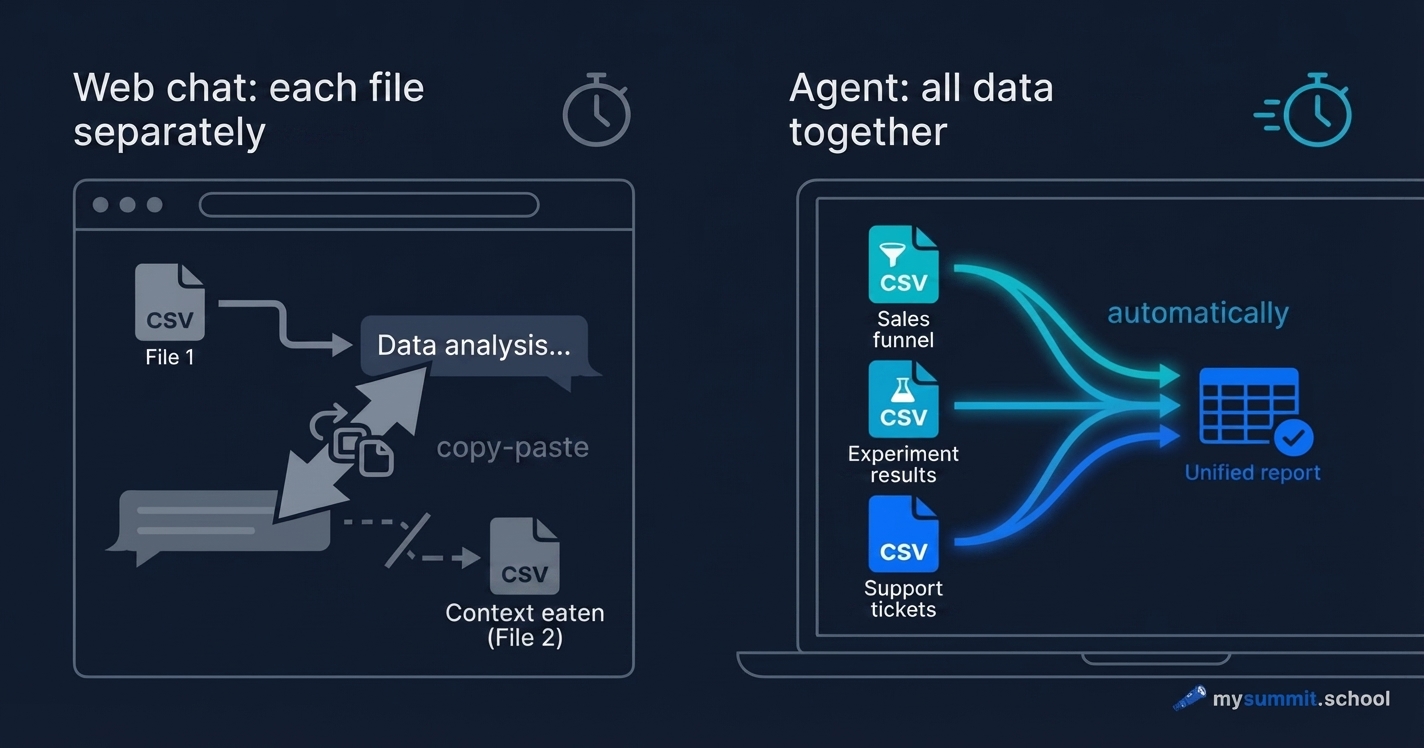
You have three data files: an activation funnel, A/B test results, and support tickets. The task – figure out why onboarding is underperforming. You open ChatGPT, upload the first file, ask your question. You get an answer. You upload the second file. ChatGPT asks: “Can you remind me of the context?” You upload the third. The context of the first file has already been pushed out.

Forty minutes later you have three separate conversations, none of which answer the original question. Because the question was one, and the data was in three places.

This isn’t a ChatGPT problem. It’s a problem of approach.

Read more
The Agent Instead of Chat: Data Analysis Without Copy-Paste
Claude Code Costs $100/Month – OpenCode Does the Same Thing for Free
13 min

Claude Code Costs $100/Month – OpenCode Does the Same Thing for Free

In March 2026, Lenny Rachitsky published an article with a telling headline: “Everyone should be using Claude Code”. It went viral on LinkedIn and tech newsletters, picked up hundreds of thousands of views, and now every week a manager somewhere asks: how do I try this?

The answer is uncomfortable. The Anthropic Max subscription that unlocks Claude Code costs $100 per month. That’s $1,200 a year for a single tool – before you’ve even figured out whether it fits your workflow. And it locks you into a single vendor, a single model, and a pricing tier designed for power users, not for someone exploring whether AI agents are worth the investment.

There’s a direct alternative. OpenCode is an open-source project that does exactly the same thing, works with any model (including free ones), and takes 15 minutes to set up.

OpenClaw in Practice: Real Use Cases and the Missing Enterprise Layer
15 min

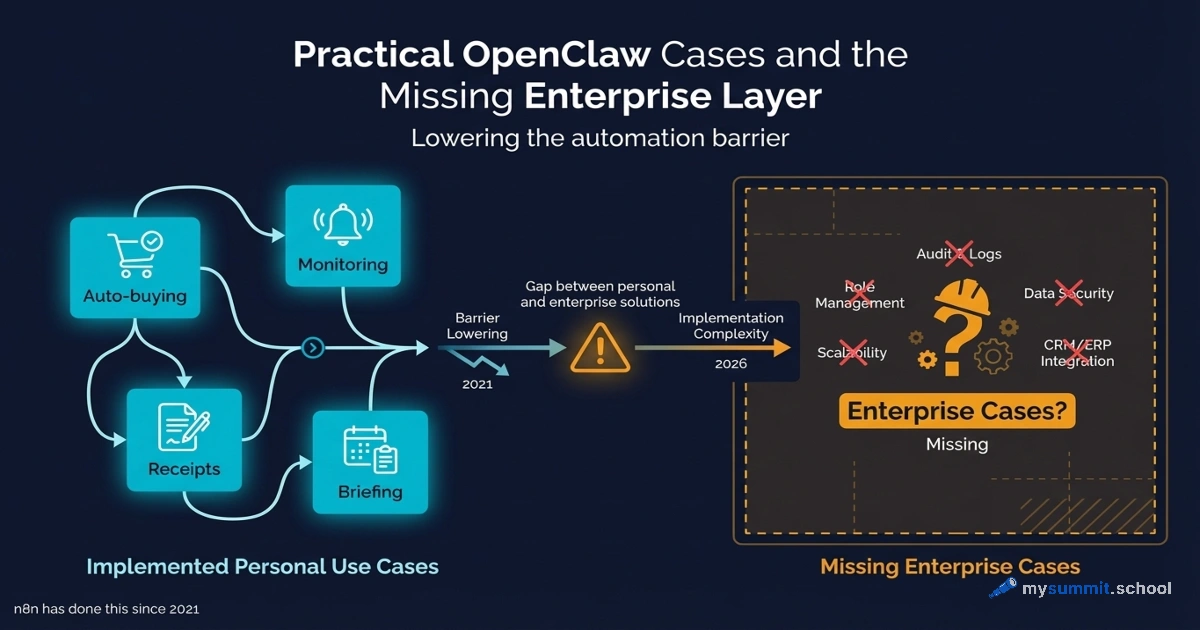
OpenClaw in Practice: Real Use Cases and the Missing Enterprise Layer

After three articles covering critical security issues, workflow lessons, and 72 hours of patches, the obvious question is: what are people actually doing with OpenClaw?

In the two weeks since its explosive growth (January 22 – February 5, 2026), a substantial body of confirmed use cases has emerged from Reddit, X/Twitter, YouTube tutorials, and developer blogs. Interestingly, the usage pattern reveals not so much revolutionary scenarios as a dramatic drop in the barrier to entry for automation that already existed.

Surprisingly, most of these use cases have been technically achievable through n8n, Make, or Zapier for the past 3–5 years. The difference isn’t in capability – it’s in who can now build it. Which raises the question: is OpenClaw truly a new category of tool, or just a more accessible wrapper around old concepts?

6,600 Commits in a Month: Workflow Lessons from the Creator of OpenClaw
16 min

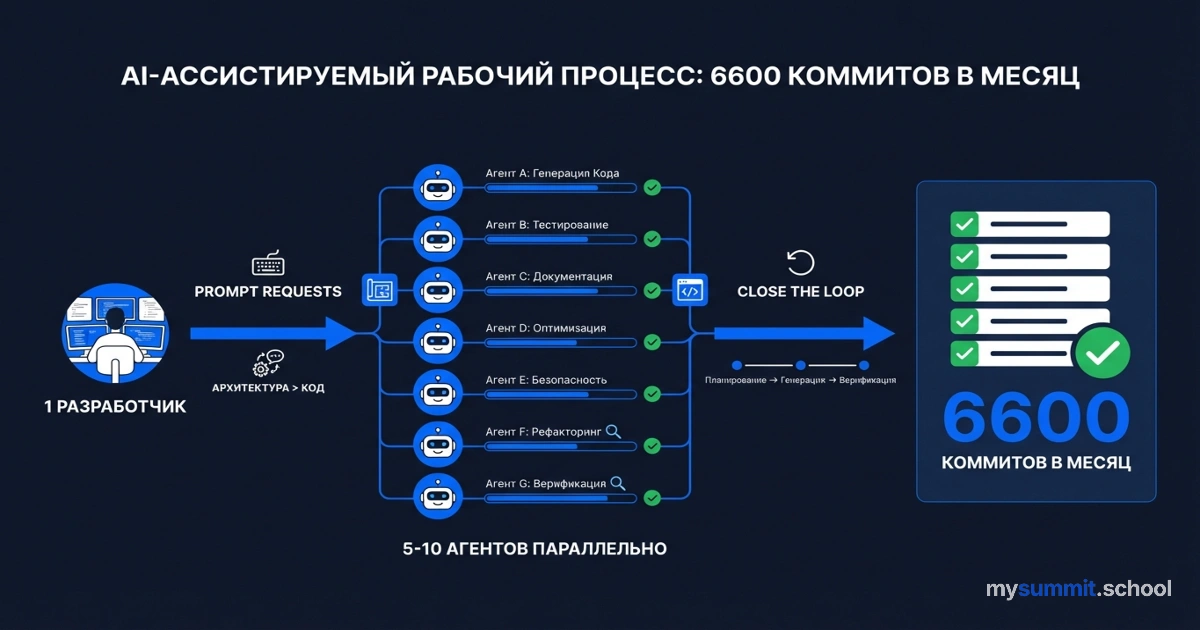
6,600 Commits in a Month: Workflow Lessons from the Creator of OpenClaw

One developer. 6,600 commits. One month.

More than most teams ship in a quarter. More than many startups produce in half a year. This is not a marketing metric – it is the real-world productivity of Peter Steinberger, creator of OpenClaw (formerly known as clawdbot), one of the most viral AI projects of January 2026.

Steinberger describes the project plainly: “It’s not a company – it’s one guy sitting at home enjoying the process.” After a successful exit from PSPDFKit, he could have taken a break. Instead, he is building an AI assistant that manages his calendar, sends emails, and checks him in for flights. “AI that actually gets things done” – that is how he articulates the project’s mission.

How can one person work like an entire company? What skills are critical when working with AI agents? Why does experience managing a team of 70+ people turn out to be the key to AI-driven productivity? And how does an engineer’s focus shift – from writing code to designing architecture?

Let us examine the actionable lessons from Peter Steinberger’s workflow – applicable to any AI-assisted project, even if you never install OpenClaw itself.

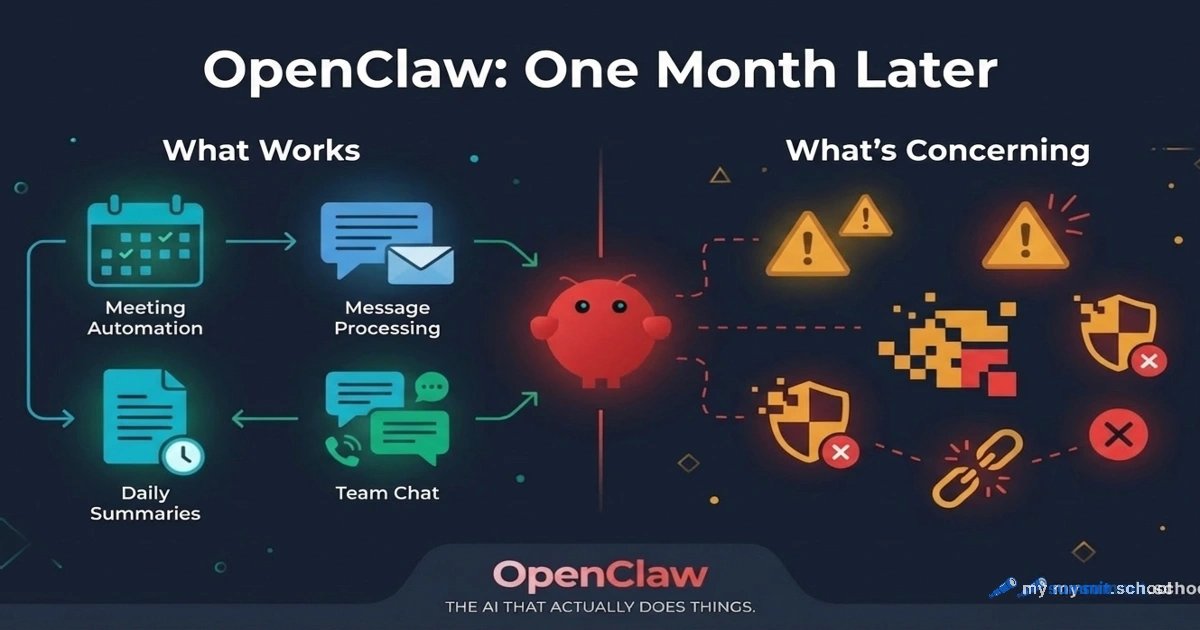
OpenClaw (Clawdbot/Moltbot): A Critical Analysis of the Viral AI Agent
18 min

OpenClaw (Clawdbot/Moltbot): A Critical Analysis of the Viral AI Agent

In the last week of January 2026, the internet exploded with discussions of a new AI agent that had already gone through several name changes: Clawdbot, then Moltbot, and finally OpenClaw. In just a few days, the project racked up over 146,000 GitHub stars, drove Cloudflare stock up 11–14%, and spawned a wave of Mac Mini unboxing posts on Twitter. Memes about Mac Minis “selling faster than iPhones” in China spread like wildfire.

The project has been officially renamed OpenClaw and is now available at openclaw.ai. This is already its third name: it started as Clawd (Anthropic asked them to change it due to similarity with Claude), then Moltbot (which never caught on with the community), and now OpenClaw – blending openness with the project’s “lobster” heritage. The new name passed trademark verification.

Let’s break it down: what OpenClaw actually is, where the hype came from, why the Mac Mini myth is exactly that – a myth, what documented vulnerabilities threaten your data, and when you should opt for proven alternatives instead.