AI for Managers

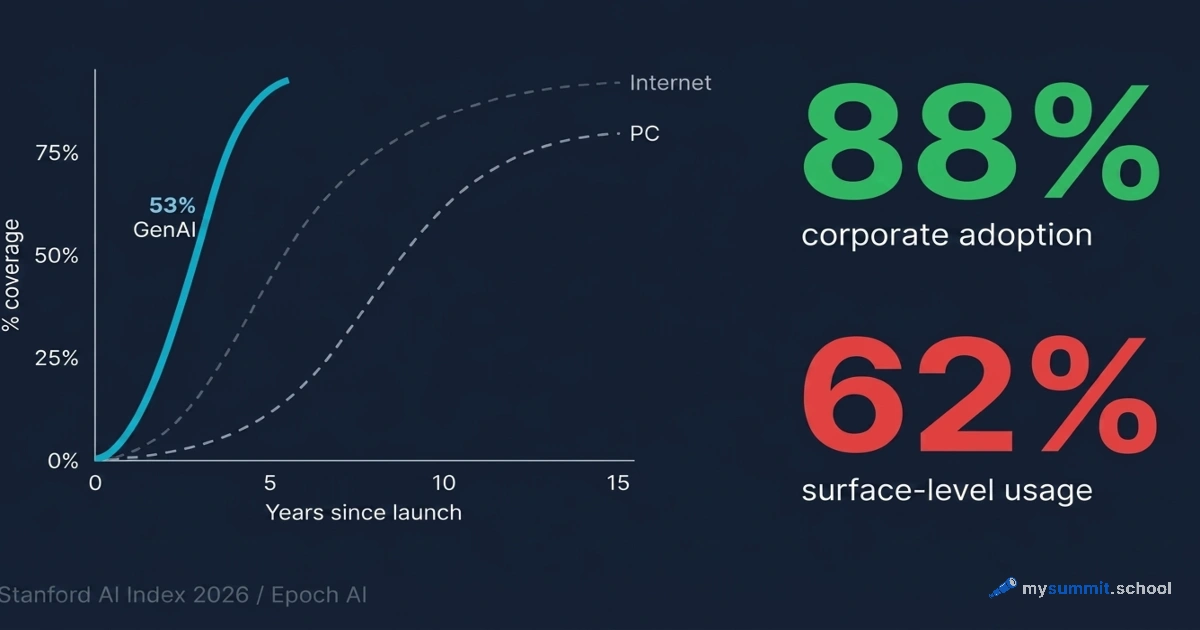
AI Spread Faster Than the Internet – But 62% of Users Got Stuck at the Start

9 min read

In April 2026, Stanford HAI released its ninth annual AI Index Report – the most comprehensive overview of the state of the AI industry. The headlines are predictably optimistic: corporate adoption reached 88%, generative AI outpaced the internet in diffusion speed, and the consumer value of GenAI tools is estimated at $172 billion annually. But look behind the numbers – and a familiar problem emerges.

Read more
AI Spread Faster Than the Internet – But 62% of Users Got Stuck at the Start
4 Prompt Engineering Techniques Tested on 7 Models: Workshop Guide
30 min

4 Prompt Engineering Techniques Tested on 7 Models: Workshop Guide

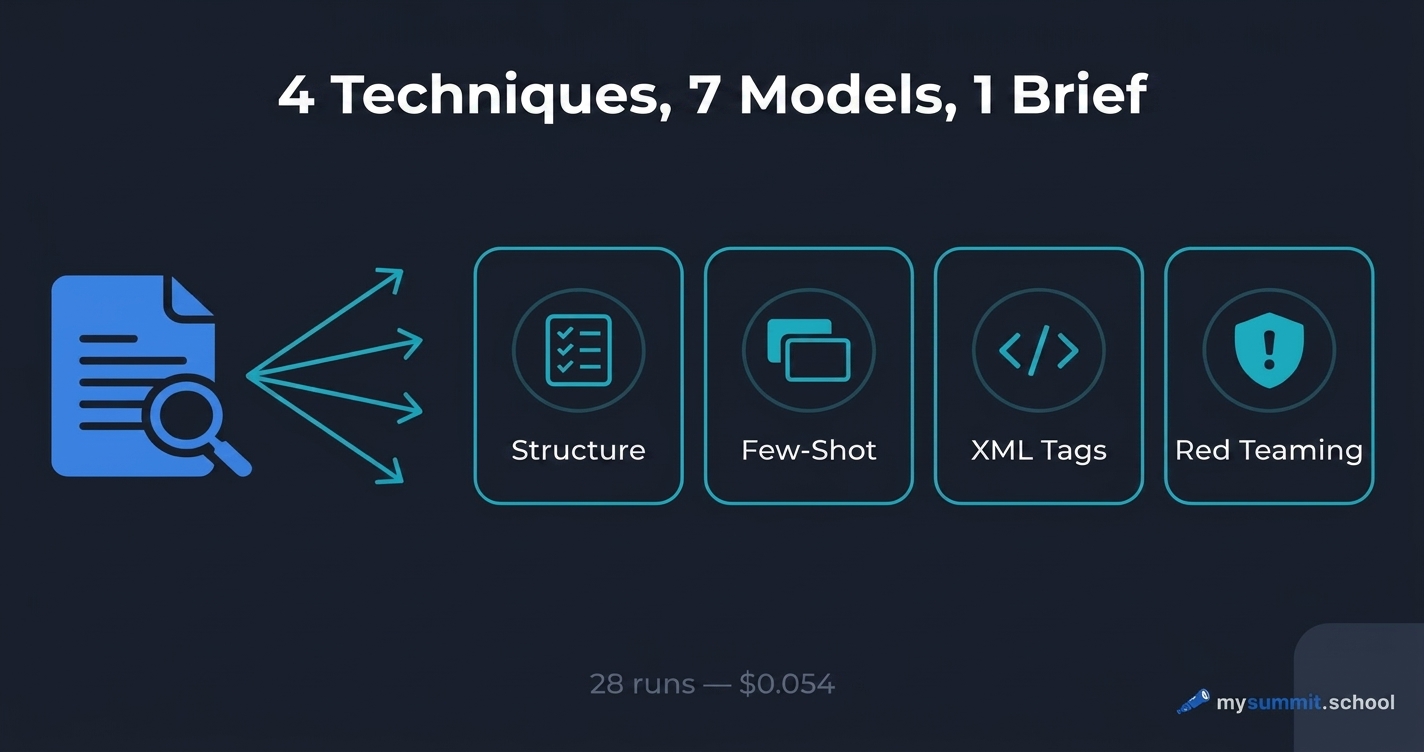
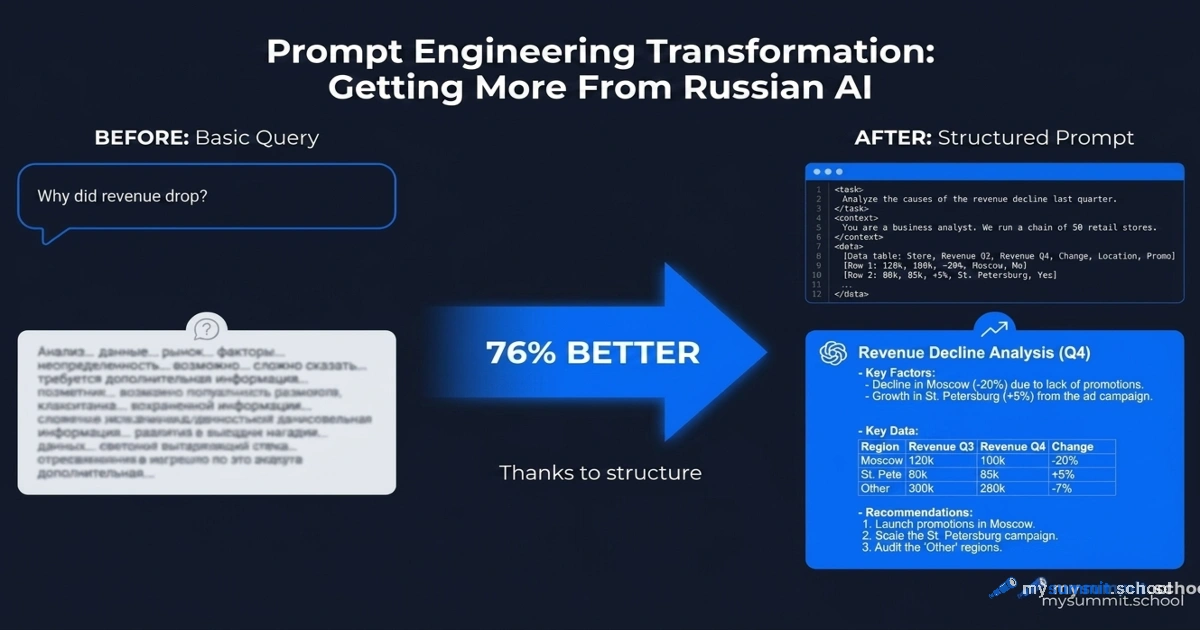
“Analyze this project and give recommendations” – one prompt, seven models, and GPT-5.4 produced 2,231 words of vague advice while Claude Sonnet delivered 11 complimentary phrases like “excellent budget structure.” Rewriting the prompt using a five-element structure brought all seven models down to 346–443 words, and the praise disappeared. Token savings: 41% to 79% depending on the model.

This isn’t theory. This is data from a “Prompt Engineering in Practice” workshop I ran at the IIBA conference. One project brief, four techniques, seven models, 28 runs – and $0.054 total. Cheaper than a vending machine coffee.

Local LLMs for Managers: What You Can Actually Run at Home
20 min

Local LLMs for Managers: What You Can Actually Run at Home

Anyone who has spent enough time with ChatGPT or Claude eventually asks the question: can I run something similar right on my own laptop – without a subscription, without data leaving the machine, without depending on someone else’s servers?

In 2026, the answer is yes – but the caveats matter more than the answer.

This article is for people already using cloud LLMs who want to understand what local execution actually gives you, what hardware you need, and where expectations break down. No deep technical dive, but concrete numbers.

P5.express and Agentic AI: Where It Helps, Where It Breaks Things
24 min

P5.express and Agentic AI: Where It Helps, Where It Breaks Things

In the PMI world, portfolio management is typically imagined as something monumental: steering committees, Tableau dashboards, hundreds of Jira fields, weekly status meetings with a deck of slides. P5.express offers a different approach. Three cycles, five documents, two roles. The entire system fits on a single page.

This is exactly the kind of system where agentic AI makes sense: minimalist architecture that’s easy to understand, clearly defined roles, structured data. But “makes sense” doesn’t mean “everywhere.” Some parts of P5.express stop working when automated – not because the AI is bad, but because those parts derive their value from the human process itself.

Below is a cycle-by-cycle breakdown. What’s worth delegating to an agent, what’s better left to people, and which model fits these tasks best.

The Agent Instead of Chat: Data Analysis Without Copy-Paste
11 min

The Agent Instead of Chat: Data Analysis Without Copy-Paste

You have three data files: an activation funnel, A/B test results, and support tickets. The task – figure out why onboarding is underperforming. You open ChatGPT, upload the first file, ask your question. You get an answer. You upload the second file. ChatGPT asks: “Can you remind me of the context?” You upload the third. The context of the first file has already been pushed out.

Forty minutes later you have three separate conversations, none of which answer the original question. Because the question was one, and the data was in three places.

This isn’t a ChatGPT problem. It’s a problem of approach.

Claude Code Costs $100/Month – OpenCode Does the Same Thing for Free
14 min

Claude Code Costs $100/Month – OpenCode Does the Same Thing for Free

In March 2026, Lenny Rachitsky published an article with a telling headline: “Everyone should be using Claude Code”. It went viral on LinkedIn and tech newsletters, picked up hundreds of thousands of views, and now every week a manager somewhere asks: how do I try this?

The answer is uncomfortable. The Anthropic Max subscription that unlocks Claude Code costs $100 per month. That’s $1,200 a year for a single tool – before you’ve even figured out whether it fits your workflow. And it locks you into a single vendor, a single model, and a pricing tier designed for power users, not for someone exploring whether AI agents are worth the investment.

There’s a direct alternative. OpenCode is an open-source project that does exactly the same thing, works with any model (including free ones), and takes 15 minutes to set up.