AI for Managers

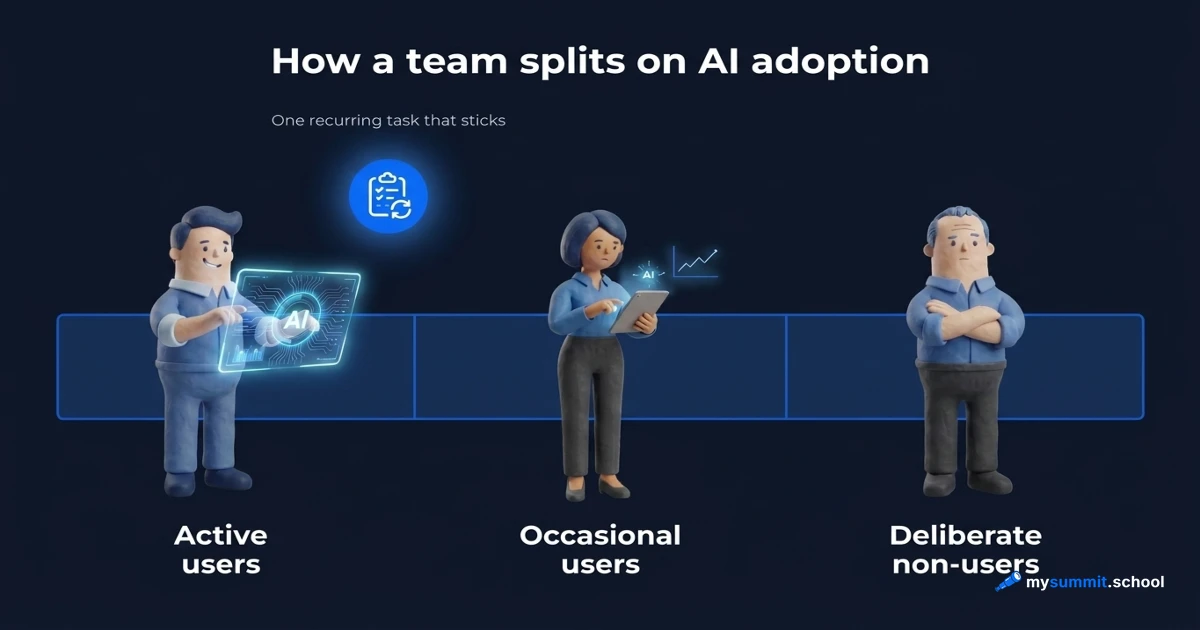
Your Team Doesn't All Use AI. It Splits Into Thirds

10 min read

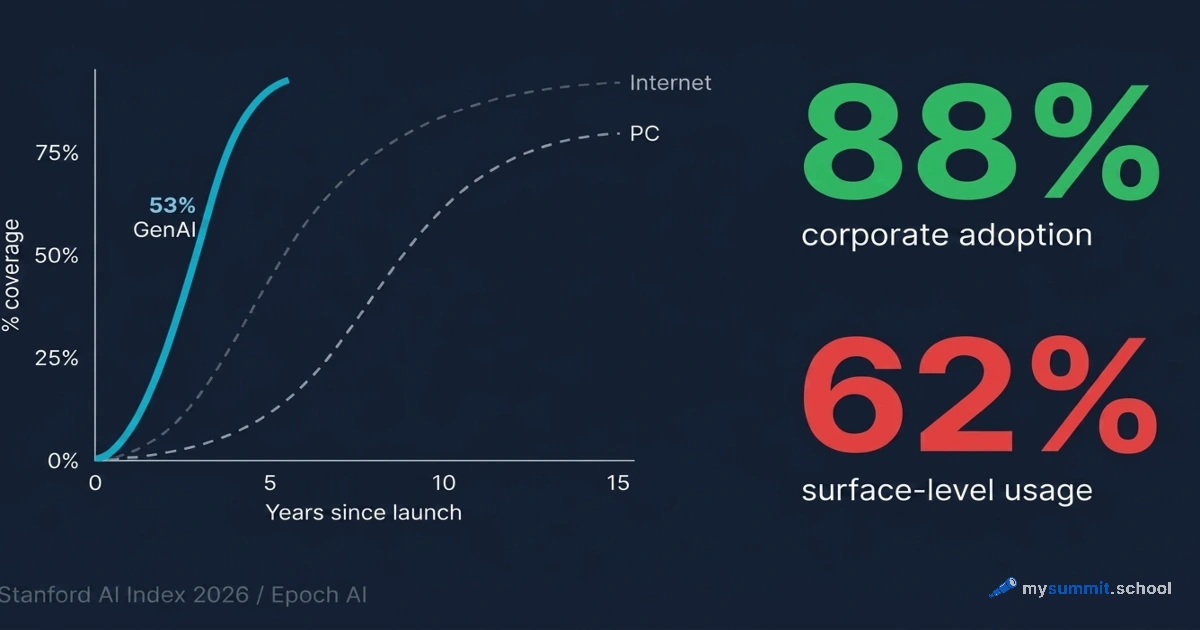
Microsoft published a number in 2026 that sounds impressive: more than 30% of the US working population uses AI. It goes on sounding impressive right up to the point where you read the definition. Using AI, here, means 90 minutes a month. That is three minutes a working day.

If your feed is full of people writing prompts over breakfast and building agents after dinner, you will have formed the impression that AI is everywhere and everyone has mastered it. The data does not support that impression. Microsoft’s Work Trend Index for 2026 (in Russian) found that organisational factors explain 67% of the difference in AI effectiveness between companies.

Read more
Your Team Doesn't All Use AI. It Splits Into Thirds
Why Teams Hide How They Use AI
12 min

Why Teams Hide How They Use AI

A doctor, 31, uses AI several times a day. He built a prompt template for the tool his hospital approved, and by his own account the results are startling. His colleagues have the same tool and complain that it gives them nothing. He knows his template would fix that.

He still does not share it.

That is the opening case in an HBR study, which asks an awkward question: if AI really does raise productivity, why can’t companies see it? A global survey by KPMG and the University of Melbourne – more than 48,000 respondents – found the answer. 57% of employees admit they hide how they use AI at work.

Why AI Pilots Die Between the Demo and the Factory Floor
11 min

Why AI Pilots Die Between the Demo and the Factory Floor

The pilot was shown at the board meeting, everyone applauded, budget was approved for ‘scaling.’ Six months later, the computer vision system that caught 98% of defects during the demo is catching maybe half, quality inspectors have stopped trusting it, and the project has quietly migrated into the ‘deferred initiatives’ column. This is not a rare mishap or the fault of a particular integrator. According to RAND, this is how more than 80% of corporate AI projects end – and almost always for reasons that were visible before the project even started.

How to Implement AI in Manufacturing: A Step-by-Step Guide for Plant Leaders
26 min

How to Implement AI in Manufacturing: A Step-by-Step Guide for Plant Leaders

A shift supervisor at a mid-size machining plant spends 40 minutes every morning filling out the shift report. Manually copying equipment readings into a Word template, describing incidents in free text, cross-checking the safety log. This routine has existed since the 1970s and hasn’t changed by a single minute. AI can cut it to ten. The hard part isn’t the technology. The hard part is knowing where to start.

GigaChat at Work: Getting the Most Out of Russia's Sovereign AI
21 min

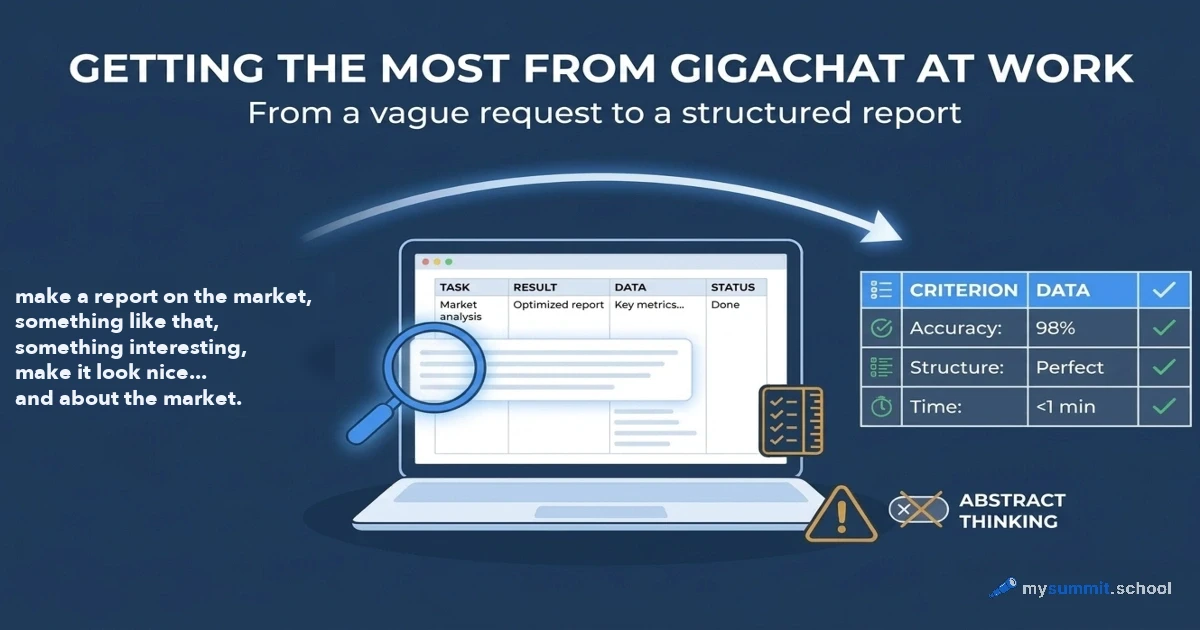
GigaChat at Work: Getting the Most Out of Russia's Sovereign AI

GigaChat is the large language model built by Sber, Russia’s largest bank. Outside Russia almost nobody uses it. Inside, it is often the only option: banks, state agencies, defense contractors and big industrial groups run it on their own servers because Russian data-localization rules and sanctions keep ChatGPT, Claude and Gemini off the table. If you work with a Russian team, a Russian subsidiary or a client in a regulated Russian industry, this is the tool on their desk.

This guide was written for those daily users, and it reads that way: the examples are Russian contracts, Russian laws, Russian prices. For anyone else it is a useful case study in a broader problem – how to get decent work out of a “sovereign” or on-premise model that trails the frontier, because policy rather than quality decided you would use it.

280x Cheaper in Two Years: The AI Economy Has Flipped
9 min

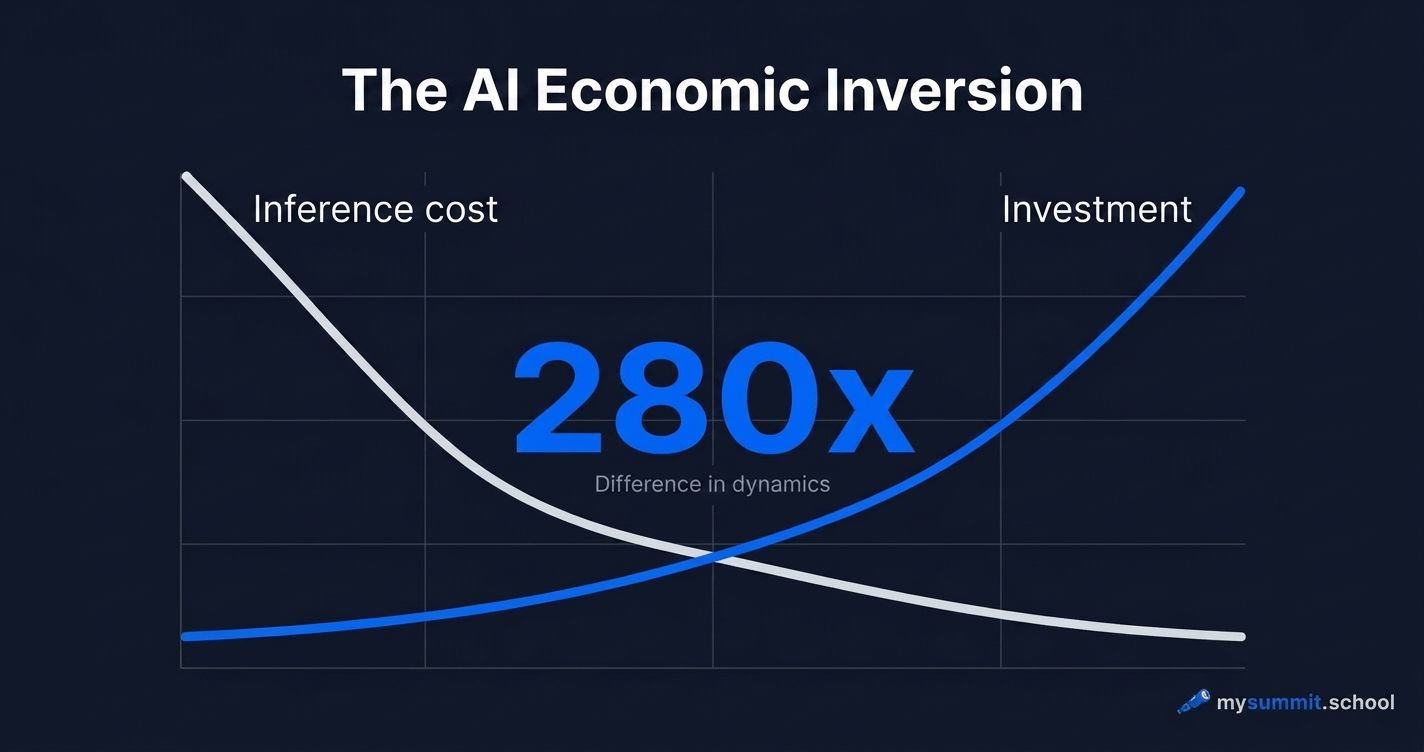
280x Cheaper in Two Years: The AI Economy Has Flipped

In 2023, a single query to GPT-4 cost enough that you had to count carefully. In 2025, the equivalent query became 280 times cheaper. Not 280 percent – 280 times. In two years, the cost of using AI went from a barrier to a rounding error.

Stanford AI Index – the annual report that compiles data on the AI industry from hundreds of sources – flagged this collapse in its 2025 edition. The 2026 report added context: AI investment exploded to $285.9bn, consumers are extracting $172bn of value a year, and data centres are eating electricity at the scale of New York State. The economy flipped – just not the way most people expected.

4 Prompt Engineering Techniques Tested on 7 Models: Workshop Guide
30 min

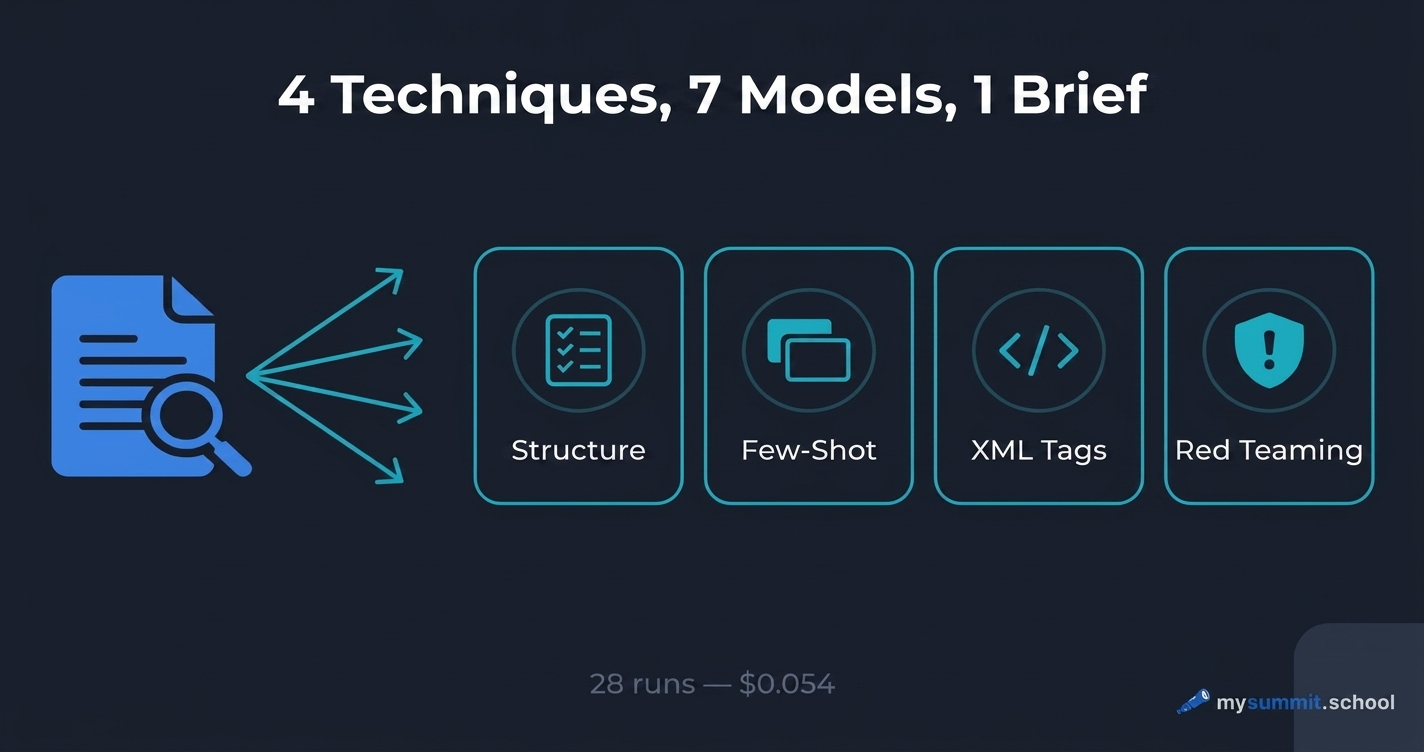
4 Prompt Engineering Techniques Tested on 7 Models: Workshop Guide

“Analyze this project and give recommendations” – one prompt, seven models, and GPT-5.4 produced 2,231 words of vague advice while Claude Sonnet delivered 11 complimentary phrases like “excellent budget structure.” Rewriting the prompt using a five-element structure brought all seven models down to 346–443 words, and the praise disappeared. Token savings: 41% to 79% depending on the model.

This isn’t theory. This is data from a “Prompt Engineering in Practice” workshop I ran at the IIBA conference. One project brief, four techniques, seven models, 28 runs – and $0.054 total. Cheaper than a vending machine coffee.