ChatGPT

AI and Project Rhythm: How a Manager Can Free Up 300 Hours a Year

14 min read

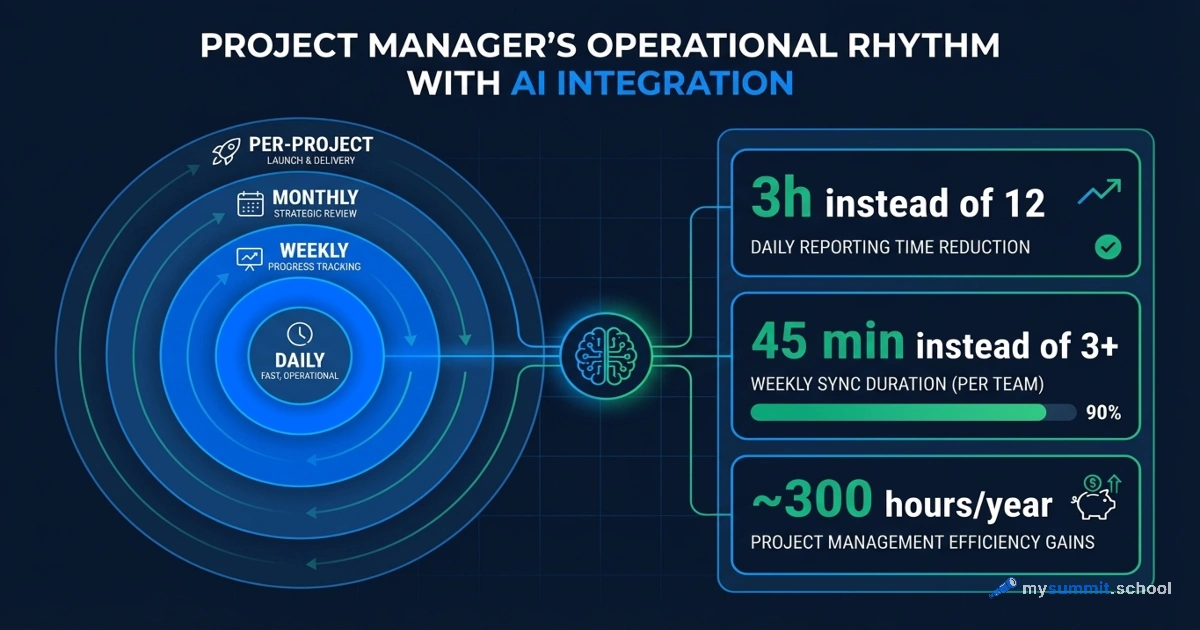
Twelve hours a week. That’s how much time a typical project manager spends on reports, plan updates, stakeholder correspondence, and risk tracking. Nearly a third of their working time goes not to making decisions, but to documenting them.

With AI, that time drops to three hours. But only under one condition: AI must be embedded in the operational rhythm of work, not used episodically – “when you remember.”

Read more
AI and Project Rhythm: How a Manager Can Free Up 300 Hours a Year
ChatGPT in 2026: What Changed and Where Managers Should Start
14 min

ChatGPT in 2026: What Changed and Where Managers Should Start

By 2026, calling ChatGPT just a “chatbot” feels off. It’s a working platform with several models, search, deep research, an agent mode, image generation, Codex for development and Sora for video. And precisely because of that, newcomers find it harder to grasp the main thing: what among all of this does an ordinary manager actually need, and what still matters only to power users and tech teams.

This version of the article is updated as of April 8, 2026: I’ve removed the models and tariffs that no longer apply, double-checked launch dates and kept only the changes that truly affect day-to-day work.

33 AI Models for Managers: Why We Need Your Ratings
11 min

33 AI Models for Managers: Why We Need Your Ratings

Over the past year, 33 new AI models have appeared on the market, each claiming the title of “best manager’s assistant.” ChatGPT updated to GPT-5.2, Claude released Opus 4.5, Gemini added a new Pro version, Yandex and Sber announced further improvements, and Chinese models went OpenSource. How do you choose a tool when every one of them promises a productivity revolution? We decided to run a large-scale comparative study – but ran into a problem that may seem paradoxical.