Meta Muse Spark: Meta's First Closed Model Since 2023
Until today, this series had no chapter on Meta. While Llama 4 was the headline, the silence was justified: the model landed to mixed reviews, and there was nothing to tell a manager about it as a working tool.
On July 9, 2026, Meta released Muse Spark 1.1 and, the same day, opened public access to the Meta Model API. The announcement went out on the company blog. The Muse family itself, which replaces Llama, started three months earlier: version 1.0 shipped on April 8, and the current model is built on top of it. In the September LMArena snapshot, muse-spark-1.2 in xHigh mode sits fifth on the text leaderboard, muse-spark-1.1 tenth, and muse-spark is sixth on the image leaderboard. Anyone comparing tools by leaderboard will run into the name. Until now, this series had nothing to say about it.
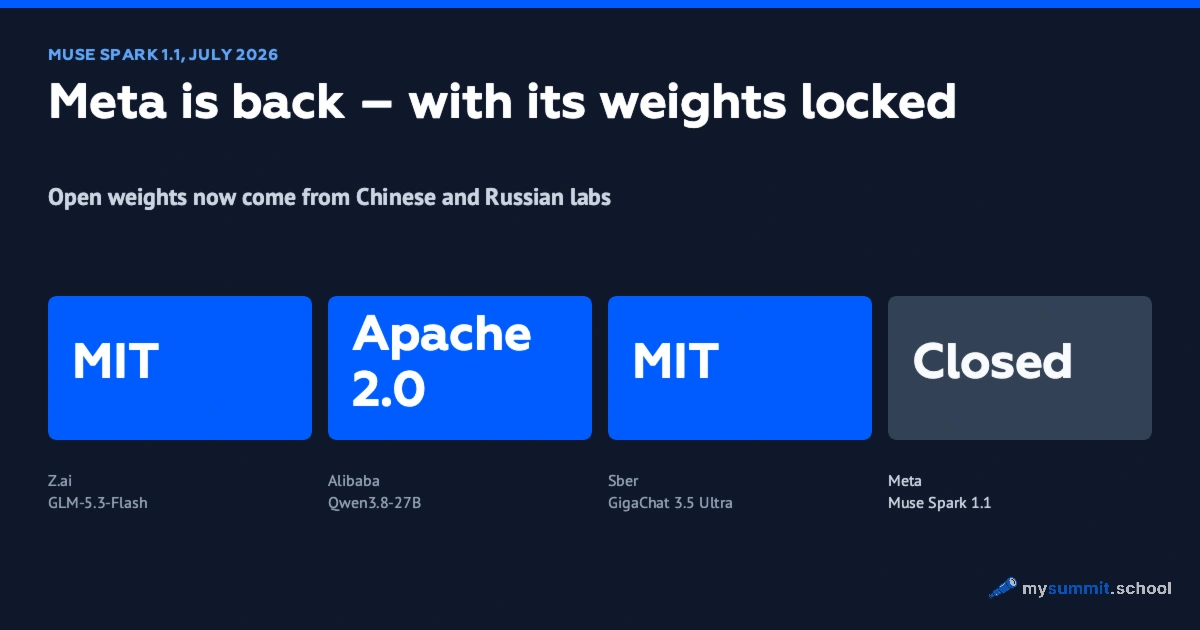
The scores are only the third most important story here. The first is the licence: in nine months Meta replaced its AI leadership, rebuilt the stack and came back with closed weights. The second is what kind of model it turned out to be: 1.1 leads on tool-calling tasks and trails noticeably on writing code.
Read more